Start with the selling unit, then calculate the order
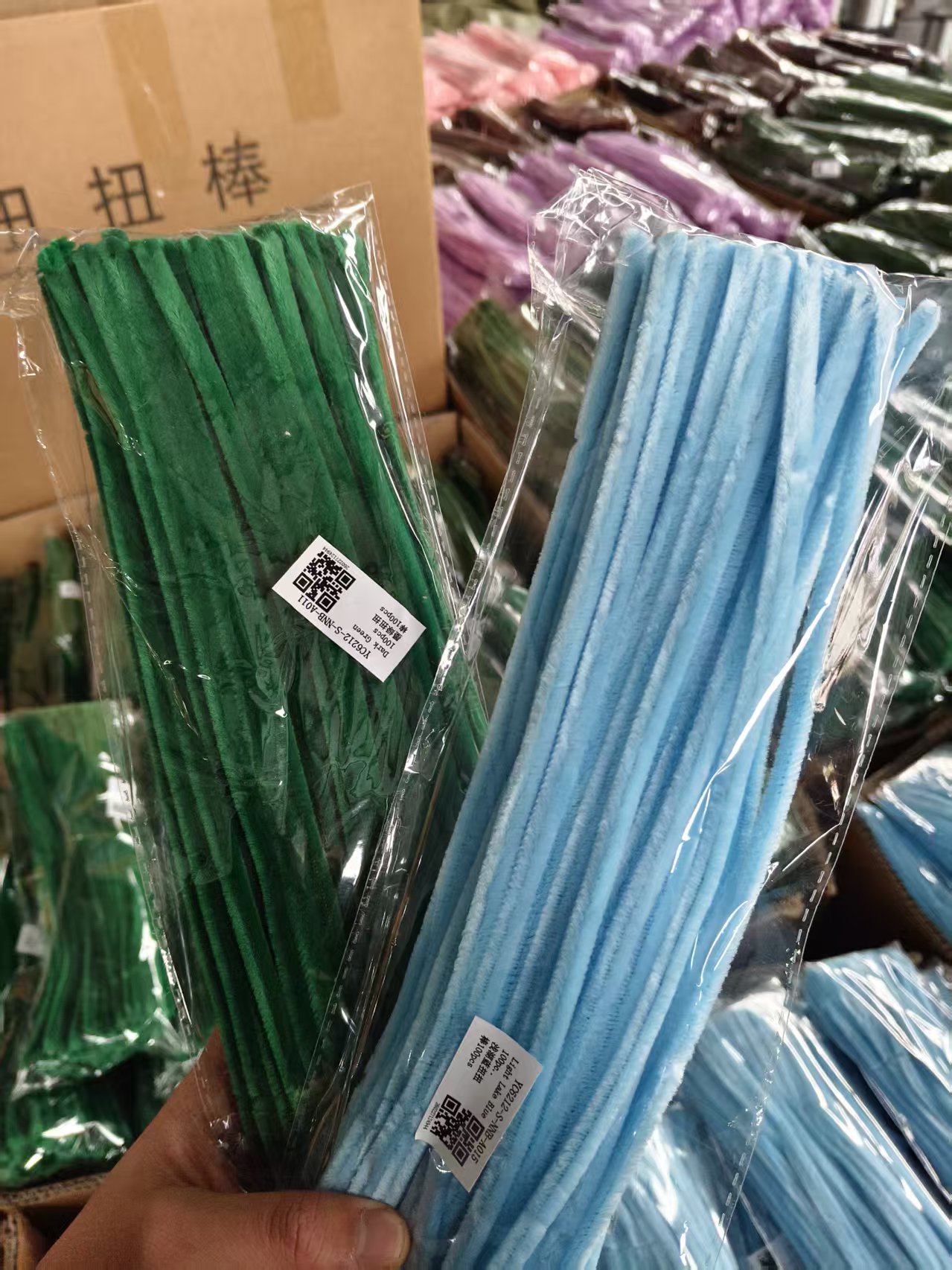
Bulk craft pipe cleaners are flexible wire stems covered in fiber, commonly called chenille stems. For a U.S. distributor, the important distinction is between bundles for repacking and finished packs that will be resold unchanged. Write down which version you need before comparing unit prices. A low price for loose stems is not directly comparable with a labeled retail pack.
Yunjian Workshop supplies standard, glitter and mixed-color stems from its self-owned factory in Anping, Hebei, China. Common diameters are 6 mm, 7 mm and 8 mm, with a common length of approximately 30 cm. Samples, minimum quantities, custom assortments and packaging are confirmed for the actual project; this guide does not advertise U.S. stock.
Use a specification that survives a repeat order
| Record | What to approve |
|---|---|
| Stem | Diameter, measured length, finish, wire feel and sample reference |
| Assortment | Color codes and exact pieces of each color, not just “mixed” |
| Selling unit | Pieces per bag or box, artwork version and buyer-supplied barcode data |
| Shipment | Final carton quantity, external dimensions, gross weight and delivery scope |
30 cm is approximately 11.8 inches, not exactly 12 inches. If your retail range uses a nominal 12-inch description, agree the actual length and tolerance before approving artwork. Compare standard stems and 8 mm stems against the intended craft result, not the diameter label alone.
Keep core colors and seasonal mixes separate
A distributor can define single-color SKUs for replenishment alongside fixed-ratio mixes for retail. A craft brand might instead specify a small set of colors for one flower-making kit. In either case, keep the ratio in writing. Use the color chart to shortlist options, then approve physical samples because screen colors cannot settle a color match.
For a seasonal program, work backwards from the date stock needs to reach your warehouse. Separate artwork approval, samples, production and transport rather than treating them as one lead time. Ask for a schedule against your selected pack and quantity; a product page cannot guarantee a holiday arrival.
Approve barcode and packaging information as separate files
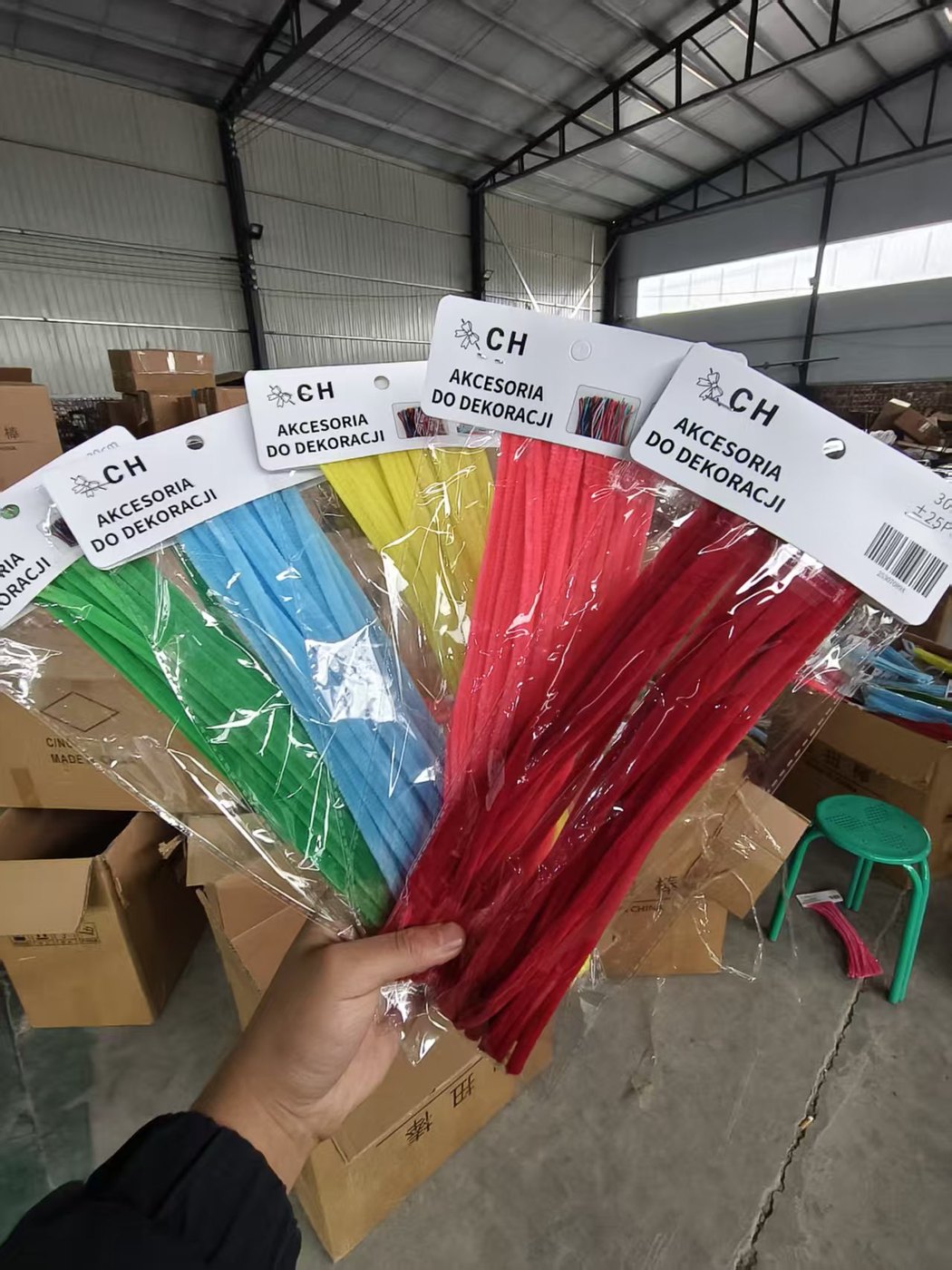
Retail bags, header cards, boxes and labels can be discussed using buyer-approved artwork. Keep one file version for each SKU and confirm which barcode belongs on the unit, inner pack or shipping carton. Labels do not establish marketplace approval. Sellers should check current requirements directly with their sales channel or fulfillment partner before asking the factory to reproduce them.
Do not assume that an intended school or children's craft use automatically makes a material suitable or certified. Identify the intended age range, marketing and end use before agreeing testing or labeling. Review the official CPSC children's-product guidance with your compliance adviser for the actual product. No blanket U.S. certification is claimed here.
Compare the same delivery scope
Give the supplier your delivery ZIP code, address type and nominated forwarder details if applicable. A quote to a U.S. port is different from a quote to a distributor warehouse. Agree whether EXW, FOB or CIF is appropriate, and name the place or port included. Do not assume import clearance, duties or final-mile transport are included without an explicit agreement.
The importer remains responsible for the import requirements even when a customs broker assists. Use the official CBP customs-broker guidance as a starting point. Have your broker review classification, current charges and documents for the actual goods; this guide does not provide a tariff code or duty estimate.
Ask for a quote without making the first message difficult
Start with the product, intended use, approximate volume and destination. Add the dimensions, color list and packaging when available. Our enquiry form keeps company and quantity optional, so you do not need a finished purchasing spreadsheet to begin. For a formal RFQ, use the specification checklist; for supplier checks, review company and factory details.
Questions from wholesale buyers
What should a U.S. distributor specify first?
Start with intended use, diameter, length, finish, color mix and estimated volume. Then confirm whether you need bulk bundles for repacking or finished retail packs.
Is 30 cm exactly 12 inches?
No. 30 cm is approximately 11.8 inches. Agree the nominal description, measured length and acceptable tolerance before approving the retail artwork.
Does a barcode make a product marketplace-approved?
No. A barcode identifies a product or shipment under the applicable system. The buyer must confirm the correct data, label placement and current channel requirements.
Can I assume one carton always holds 20,000 pieces?
No. A common bundle reference is 100 pieces, but carton quantity, dimensions and weight must be confirmed for the selected diameter and packaging.
Can I receive a fixed U.S. duty or freight quote from this guide?
No. Have a customs broker review current classification and charges, and request freight against the actual shipment and delivery scope.
Where can I verify Yunjian Workshop?
The company-verification page identifies Yunjian Workshop as the trademark used by Anping Maoye Metal Products Co., Ltd., with a self-owned factory in Anping, Hebei, China. Video verification or a factory visit can be discussed.