Introduction
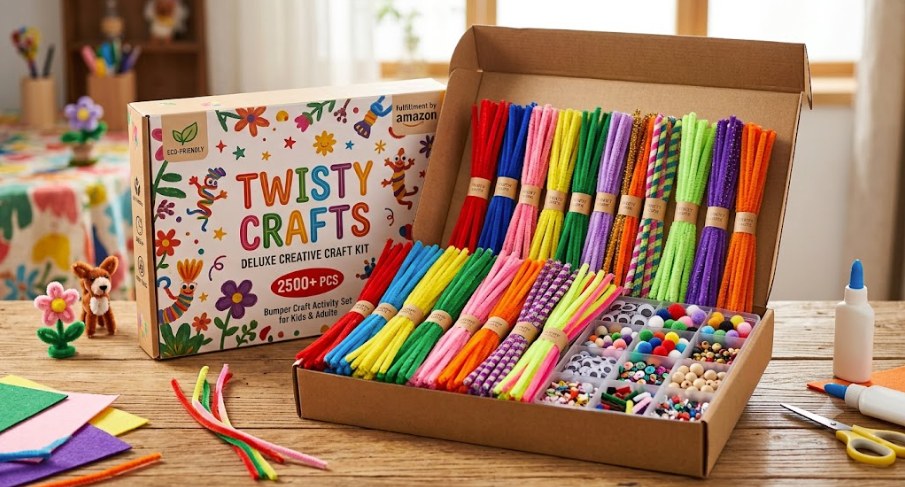
The best chenille stem packaging depends on the sales channel. Bulk buyers usually need efficient carton packing or simple poly bags. Retail brands need clear bags, header cards, labels or boxes with product name, count, size, color information, barcode and warning text. Private-label and craft kit buyers should approve both the packaging structure and artwork before mass production.
Packaging is one of the biggest differences between a raw craft material and a product that sells. The same chenille stem can be packed for wholesale cartons, school supply programs, Amazon listings, craft retail shelves, seasonal kits or private-label gift boxes. Each channel has different expectations for protection, presentation, labeling and cost.
This guide helps buyers choose practical custom packaging for chenille stems and pipe cleaners. It explains common packaging types, private-label decisions, label information, barcode planning, carton marks, kit packaging and common mistakes that create avoidable cost or delays.
Table of Contents
- Why packaging matters
- Common packaging types
- Packaging by sales channel
- Private label requirements
- Retail label and barcode checklist
- Chenille stem craft kit packaging
- Export cartons and carton marks
- Packaging approval workflow
- FAQ
Why Packaging Matters for Chenille Stem Orders
Packaging affects more than appearance. It changes unit cost, carton quantity, shipping volume, barcode management, retail presentation, damage risk and customer understanding. For wholesale buyers, packaging can decide whether a product is efficient to distribute. For retail buyers, packaging can decide whether the product looks trustworthy and easy to buy.
Chenille stems are lightweight, flexible and colorful. This creates both opportunity and risk. A clear bag can show color value, but a messy color arrangement may look low quality. A box can create premium value, but it can also increase freight volume. A header card can improve branding, but artwork mistakes can delay production.
Good packaging starts with the buyer’s sales channel. A product for school supply distributors does not need the same package as a premium DIY gift kit. A product for Amazon may need stronger protection and clearer listing consistency than a simple wholesale refill pack.
Common Chenille Stem Packaging Types
Most custom chenille stem packaging falls into a few practical formats. Buyers should compare presentation, cost, packing efficiency and market fit.
| Packaging type | Best for | Buyer notes |
|---|---|---|
| Bulk poly bag | Wholesale distribution, refills, schools | Cost-efficient and simple, but less retail presentation. |
| Clear retail bag | Craft stores, marketplace sellers | Shows color and count clearly; may need label or insert. |
| Header card bag | Hanging retail display | Good brand visibility and easy shelf display. |
| Printed label | Private label programs | Flexible and lower setup than full printed packaging. |
| Color box or kraft box | Premium kits, giftable products | Better presentation but higher cost and larger volume. |
| Window box | Premium retail display | Shows product while protecting shape and color arrangement. |
| Complete craft kit | DIY brands, children’s crafts, seasonal kits | May include instructions, accessories and multiple materials. |
Choose Packaging by Sales Channel
A packaging decision should begin with where the product will be sold. If a buyer sells to distributors, carton efficiency matters. If the buyer sells on a marketplace, product photos, barcode, pack count and customer expectation matter. If the buyer sells through retail stores, shelf display and visual branding become more important.
For wholesale distribution, simple bags and efficient carton packing are often enough. The buyer may care more about count accuracy, color ratio and carton marks than premium design. For retail shelves, the product should communicate what it is, how many pieces are included, what size they are and what projects they are suitable for.
For marketplace sellers, packaging should protect the product during delivery and match the online listing. If the listing says “100 pipe cleaners, 20 colors,” the package should make that promise easy to confirm. If the product is private label, the brand should appear consistently on package, listing and invoice documents.
Private Label Packaging Requirements
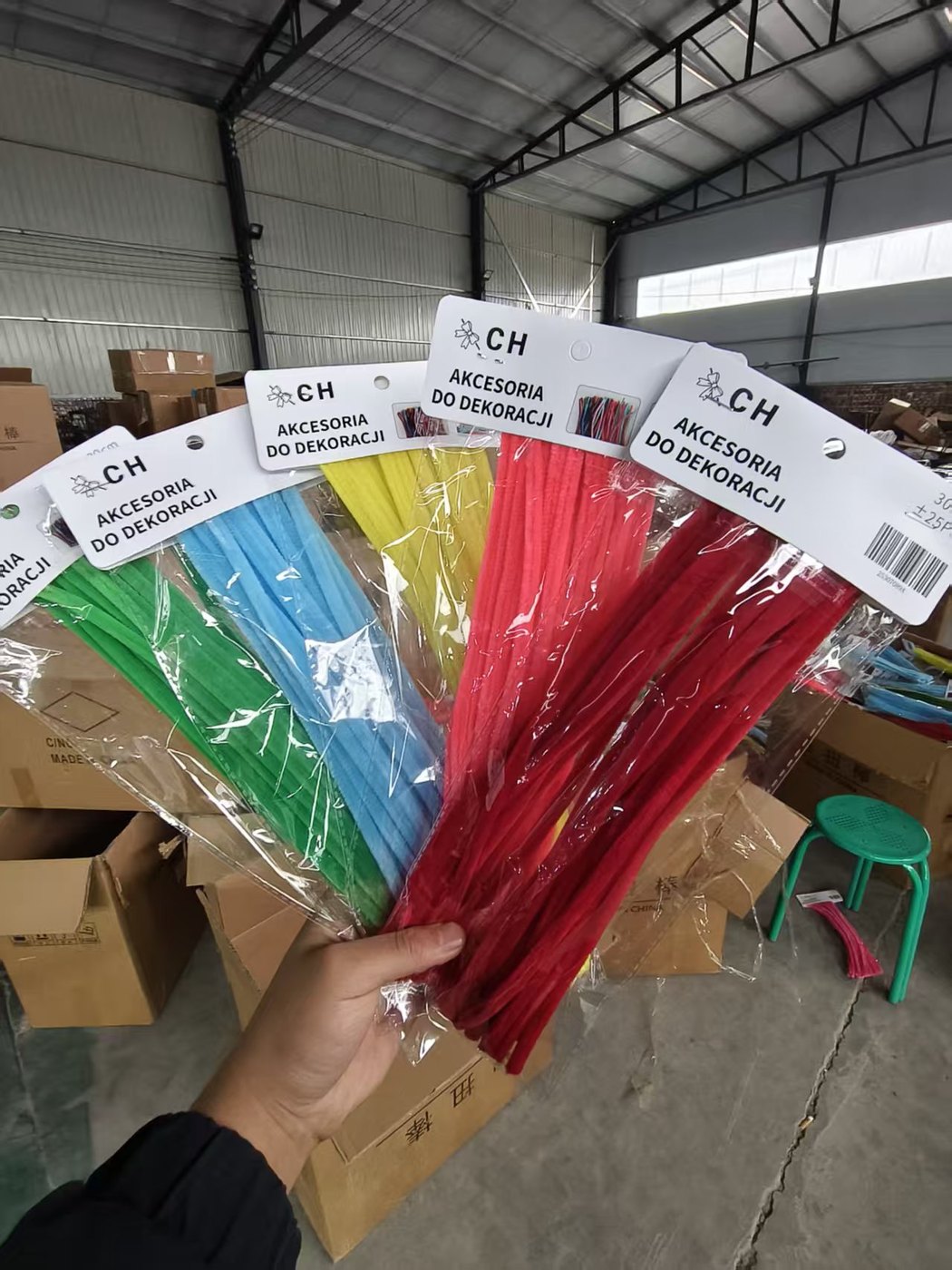
Private label packaging means the product is sold under the buyer’s brand. This can be as simple as a logo sticker or as complete as a custom printed box with instructions and accessories. The important point is consistency. The product name, count, size, color information and barcode should match the buyer’s listing and sales documents.
Buyers should prepare artwork files early. If artwork is not ready, the supplier can still estimate packaging options, but final pricing and sampling may require exact size, printing method and file format. Packaging artwork should be checked for spelling, brand name, barcode, warning text, age information where needed and country-of-origin statement.
For OEM chenille stem manufacturing, packaging is part of the product specification. A buyer should not approve the chenille stem sample while leaving packaging undecided. Packaging affects production planning, labor, carton size and inspection.
Retail Label and Barcode Checklist
A retail label should help customers and warehouse teams identify the product quickly. It should also support compliance and inventory control. Requirements vary by market, product category and buyer policy, so buyers should confirm what their sales channel requires.
- Product name, such as “Chenille Stems” or “Pipe Cleaners for Crafts”
- Piece count per pack
- Size, such as 6mm × 30cm
- Color information, such as assorted colors or specific color names
- Brand name or private-label logo
- Barcode or SKU label
- Warning text and age guidance where required
- Importer or distributor information if needed
- Country of origin
- Batch, carton or production reference if the buyer requires traceability
For online sellers, label information should match the listing title and bullet points. If a listing uses both “chenille stems” and “pipe cleaners,” packaging can also use both terms to improve customer recognition.
Chenille Stem Craft Kit Packaging
Craft kits are more complex than simple stem packs because they may include multiple materials. A flower craft kit might include chenille stems, floral stems, tape, stamens, wrapping paper and instructions. A seasonal decoration kit might include glitter stems, beads, bells, pom-poms or paper accessories.
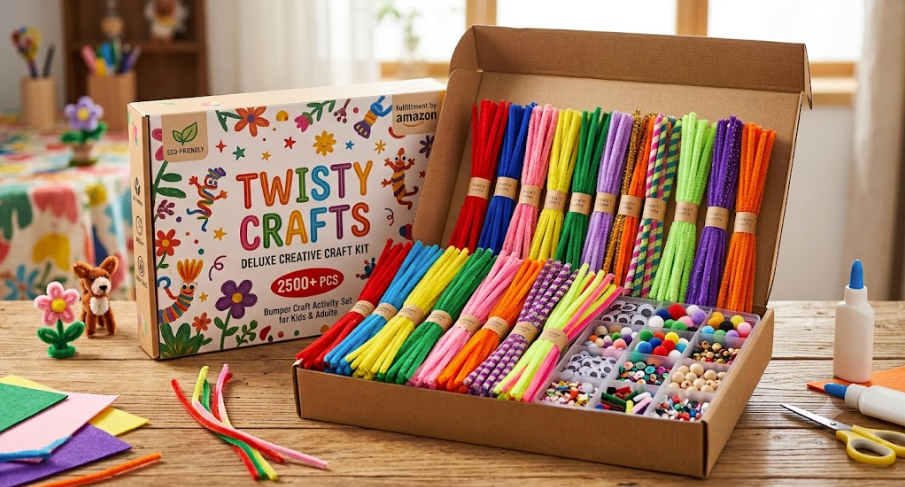
For kits, the buyer should define the finished project first. How many flowers, decorations or crafts can the customer make? How many pieces of each material are needed? Are instructions included? Are there small accessories that need inner bags or compartments? These questions affect box size, insert design and inspection.
Kit packaging should also make the product easy to understand from the outside. Clear project photos, material count and age or skill level can improve buyer confidence. If the kit is for children, the buyer should pay close attention to warning text and market requirements.
Export Cartons and Carton Marks
Outer cartons are easy to overlook, but they matter for logistics. A carton mark helps warehouses identify product, quantity, SKU, destination and handling requirements. For mixed SKUs, carton marks reduce receiving errors. For marketplace shipments, carton size and weight can also affect fulfillment cost.
A professional carton mark may include product name, SKU, color or assortment, pack count, carton quantity, gross weight, net weight, carton dimensions, country of origin and handling icons. Buyers should confirm whether their warehouse, forwarder or retail customer has specific carton requirements.
Packaging decisions can also affect carton efficiency. A beautiful box may reduce the number of units per carton. A long stem length may require a longer carton. A mixed kit with accessories may need stronger inner protection. These details should be discussed before final pricing.
Packaging Approval Workflow
A good packaging approval process protects both buyer and supplier. The buyer should approve structure, artwork and packed sample before bulk production. Do not rely only on digital artwork, because the final printed size, color and material feel may be different.
The workflow can be simple: confirm packaging type, confirm dieline or label size, approve artwork file, review digital mockup, approve physical packaging sample, approve packed product sample and then release production. For repeat orders, confirm whether artwork version, material or carton size has changed.
Keep records of approved artwork, barcode, label position, pack count, carton marks and sample photos. These records help prevent repeat-order drift and support inspection.
FAQ
What is the cheapest packaging for chenille stems?
Bulk poly bags or simple clear bags are usually the most cost-efficient, especially for wholesale distribution or refill packs.
What packaging is best for retail pipe cleaners?
Retail buyers often use clear bags with header cards, printed labels or boxes because they show color, count and brand information clearly.
Can I add my logo to chenille stem packaging?
Yes. Logo options include stickers, header cards, inserts, printed bags, printed boxes and carton marks.
Do I need a barcode?
If the product will be sold through retail stores, marketplaces or organized warehouses, a barcode or SKU label is usually recommended.
Can chenille stems be packed with accessories?
Yes. They can be packed with floral stems, tape, stamens, wrapping paper, beads, instructions or other craft materials for complete kits.
Does packaging affect MOQ?
It can. Printed packaging, custom boxes or special labels may have their own MOQ separate from the chenille stem MOQ.
Should I approve a printed sample?
Yes. A printed packaging sample helps confirm color, size, barcode, material and final presentation before bulk production.
What is the most common packaging mistake?
The most common mistake is approving the product but not confirming packaging details such as count, label wording, barcode, carton mark and artwork version.
Conclusion
Custom packaging can make chenille stems easier to sell, easier to ship and easier to reorder. The best packaging is not always the most expensive option; it is the format that matches the sales channel, protects the product, communicates the specification and supports the buyer’s brand. Before ordering, define pack count, size, color information, label, barcode, carton marks and sample approval steps.
Related Articles
Need private-label packaging for chenille stems?
Send your pack count, target market, packaging style and artwork needs. We can help you choose a practical packaging structure for quotation and sampling.