Introduction
Wholesale buyers should choose chenille stem colors by matching the target customer, season, application, packaging style and required color consistency. Standard solid colors work well for school and craft packs, pastel colors are suitable for soft DIY kits and floral crafts, glitter colors fit holiday and premium displays, and custom mixed ratios help brands build retail assortments for specific markets.
Color is one of the strongest selling points of chenille stems. A buyer may choose the correct size and packaging, but if the color palette does not match the market, the product can still underperform. For wholesalers, craft brands, importers and marketplace sellers, color planning affects product photography, shelf presentation, repeat orders, customer reviews and purchasing efficiency.
This guide explains how buyers can plan chenille stem colors professionally: what color families are commonly used, when to choose mixed assortments, how to approve color samples, how to avoid color inconsistency and how to write a clear color specification for suppliers.
Table of Contents
- Why color planning matters
- Common color types
- Color strategies by use case
- Mixed color ratios
- Seasonal palettes
- Custom color matching
- Color quality control
- Color specification checklist
- FAQ
Why Color Planning Matters in Wholesale Orders
Chenille stems are visual products. Buyers use them for crafts, decorations, school activities, floral projects, DIY kits, retail packs and seasonal assortments. Color influences whether a pack feels suitable for children, premium crafting, holiday decoration, floral design or everyday classroom use.
For B2B orders, color also affects operations. A clear color plan helps the supplier prepare materials, count ratios, pack consistently and repeat the same assortment in future orders. A vague request such as “mixed colors” can create misunderstanding because a factory may choose a general assortment while the buyer expects a specific retail palette.
If the product will be sold online, color accuracy becomes even more important. Product photos, customer expectations and reviews all depend on whether the delivered product matches the listing. For marketplace sellers, color mismatch can lead to returns or poor ratings. For wholesalers, inconsistent color ratios can create complaints from downstream retailers.
Common Chenille Stem Color Types
Most wholesale buyers select from several color groups. Each group has a different buying purpose and packaging strategy.
| Color type | Best for | Buyer notes |
|---|---|---|
| Solid colors | School supplies, basic crafts, single-color packs | Easy to specify and repeat. Good for distributors and education channels. |
| Assorted rainbow colors | General craft packs and retail multipacks | Useful when buyers need broad appeal and high perceived variety. |
| Pastel colors | Floral crafts, soft DIY kits, spring themes | Works well for giftable kits, handmade flowers and gentle visual style. |
| Glitter metallic colors | Holiday crafts, party decorations, premium packs | Needs separate sample approval because reflection changes under light. |
| Seasonal palettes | Christmas, Halloween, Easter, Valentine, school seasons | Should be planned early because seasonal demand is time-sensitive. |
| Custom color ratios | Private label packs and brand-specific kits | Requires exact ratio, sample approval and clear packing instructions. |
Before choosing a color type, buyers should decide whether the product is meant to be a universal craft supply, a seasonal decoration item or a themed kit. The same chenille stem can become a different product simply by changing the color mix and packaging.
Color Strategies by Buyer Use Case
Different buyers need different color logic. A school supply distributor may prefer balanced assorted colors. A craft brand may prefer a curated palette that looks beautiful in product photography. A seasonal importer may care most about theme accuracy and delivery timing.
| Buyer type | Recommended color strategy | Common mistake to avoid |
|---|---|---|
| School supply distributor | Balanced solid or rainbow assortment with practical colors. | Too many niche colors and not enough basic colors. |
| Craft brand | Curated palette that matches packaging, photography and brand style. | Using generic mixed colors that do not feel branded. |
| Marketplace seller | Clear color names and photos that match actual inventory. | Changing color ratios between batches without updating listings. |
| DIY kit company | Exact color count based on the final project instructions. | Under-counting key colors needed for assembly. |
| Seasonal importer | Holiday-specific palettes confirmed early with production samples. | Approving colors too late for seasonal shipping schedules. |
How to Plan Mixed Color Ratios
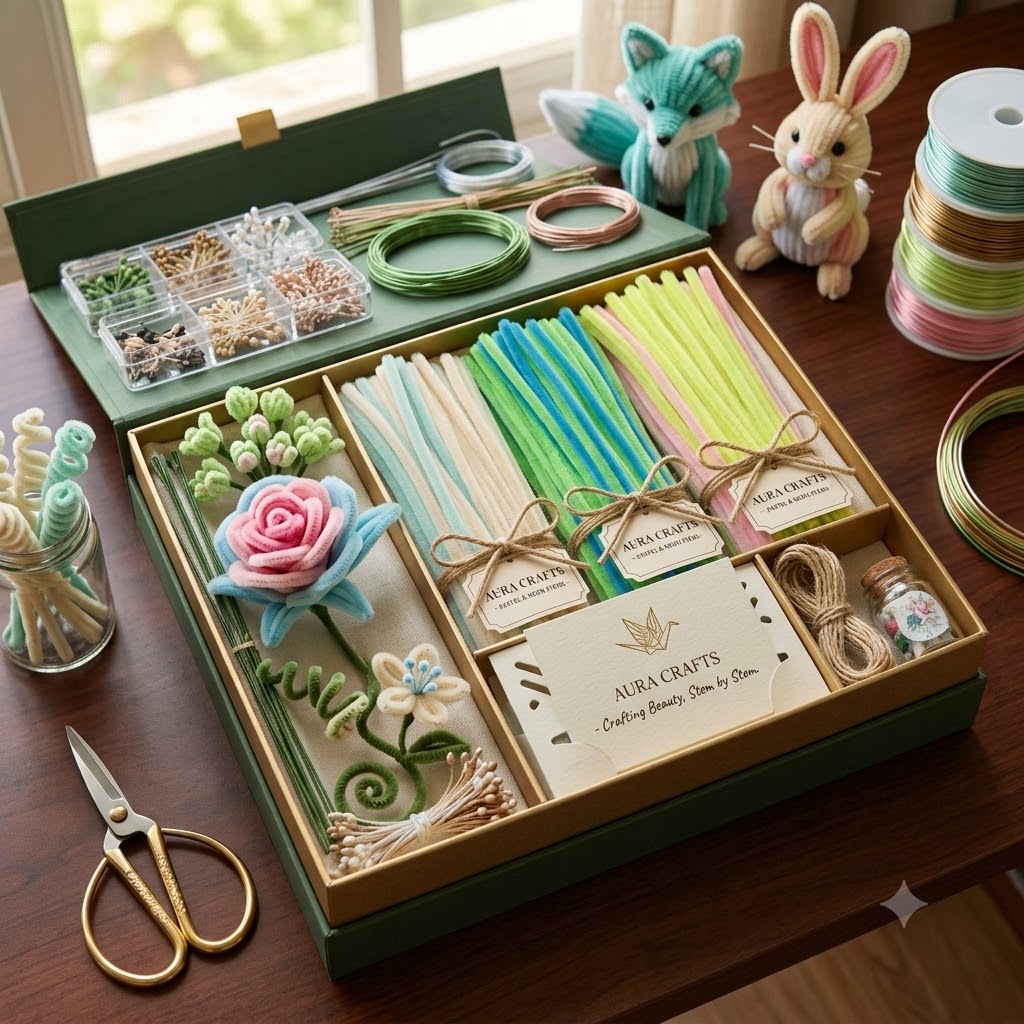
A mixed color set is not just “many colors in one bag.” A professional mixed set has a planned ratio. For example, a 100-piece pack may include 10 colors × 10 pieces each, or it may include a theme ratio such as more green and red for Christmas, more pastel colors for spring, or more neutrals for floral crafts.
For mixed color chenille stem sets, the buyer should provide both the color list and the count per color. This prevents production teams from filling packs based on available stock or general assumptions. It also helps downstream retailers receive consistent product every time.
If the pack is part of a craft kit, the ratio should be connected to the project instructions. If one flower requires three green stems and one pink stem, the kit should include enough green stems for the number of flowers promised on the packaging. Color ratio planning prevents customer frustration and improves kit usability.
Seasonal Palettes for Retail and Craft Programs
Seasonal colors can increase sales because buyers are not only purchasing materials; they are purchasing a theme. Christmas products may use red, green, white, gold and silver. Halloween sets often use orange, black, purple and green. Valentine products may use red, pink, white and lavender. Easter and spring kits often use pastel yellow, blue, pink, green and purple.
For seasonal programs, color planning should begin earlier than ordinary replenishment orders. The buyer needs time for sample approval, production, packing, export shipping and retail distribution. If a color requires special material or custom matching, lead time may be longer.
Glitter and metallic colors are especially important for holidays. Glitter chenille stems can create stronger shelf impact, but they should be checked under realistic lighting. A metallic stem can look different in a warehouse, in a photo studio and under retail lighting.
Custom Color Matching and Sample Approval
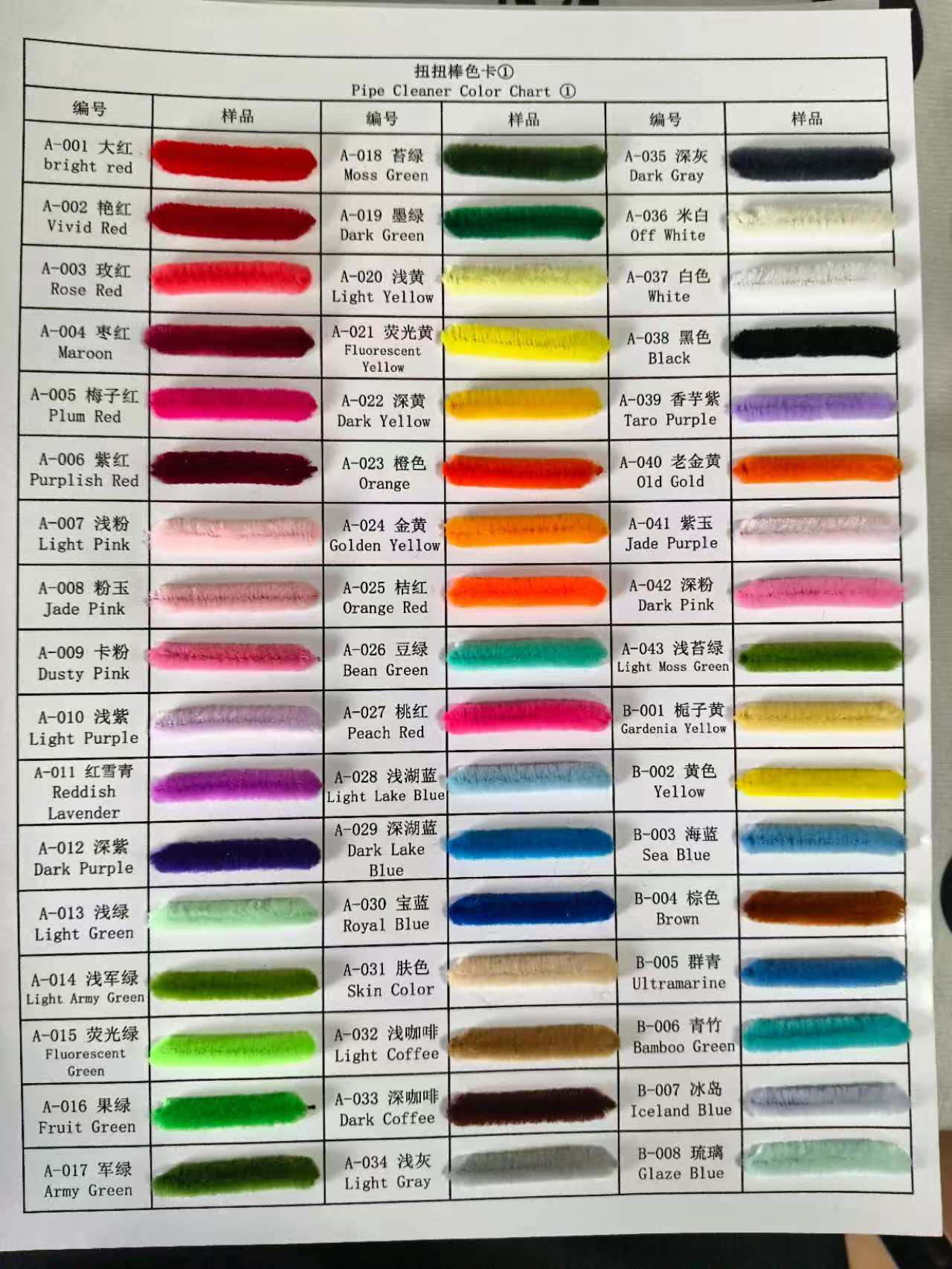
Custom color matching is useful when a buyer needs brand colors, private-label palettes or a special seasonal theme. The buyer may provide Pantone references, physical samples, product photos or a previous approved batch. However, the most reliable approval method is still a physical sample.
Screen colors are not enough. Different phones, monitors and lighting conditions change how color appears. A physical sample allows the buyer to check tone, brightness, pile coverage and finish. For repeat orders, both buyer and supplier should keep approved samples as reference.
Custom color work may affect MOQ and lead time. If the color requires special material preparation, the buyer should confirm minimum quantity, sample timing, production timing and whether the supplier can repeat the color in future orders.
Color Quality Control for Repeat Orders
Color consistency matters most when the product is reordered. A buyer may accept slight variation in a one-time promotional pack, but brand programs and marketplace listings require stable appearance. To reduce risk, buyers should specify acceptable tolerance and keep reference samples.
Inspection should include color tone, color ratio, pack count, mixed assortment accuracy, visible contamination, pile coverage and packaging match. For retail packs, the color order inside the bag or box may also affect presentation. If the product has a clear bag or window box, color placement can influence perceived value.
For large orders, buyers may request pre-production samples and production photos before shipment. These checks do not replace inspection, but they help identify obvious color issues early.
Color Specification Checklist
A professional color specification should include enough information for quotation, sampling, production and inspection.
- Product type: standard, glitter, mixed color or custom finish
- Color names, color numbers, Pantone reference or physical sample
- Color ratio: pieces per color in each pack
- Total piece count per bag, box or kit
- Diameter and length, using the size guide if needed
- Packaging format: bulk bag, retail bag, header card, box or kit
- Target market and sales channel
- Approved sample requirements
- Repeat order consistency expectations
- Label, barcode and carton mark requirements
FAQ
How should I choose chenille stem colors for wholesale?
Start with the target use: school crafts, retail packs, seasonal decoration, floral kits or private label programs. Then choose solid, pastel, glitter or mixed ratios to match that use.
What is the best color mix for general craft packs?
A balanced rainbow assortment usually works best for general craft packs because it gives buyers broad color variety and simple retail positioning.
Can I order one color only?
Yes. Single-color packs are common for schools, decorations, floral work and event supplies. MOQ and packaging may differ from assorted packs.
Can you match Pantone colors?
Custom matching may be possible, but buyers should approve physical samples because chenille texture and lighting can affect the perceived color.
Are glitter colors the same as standard colors?
No. Glitter colors have metallic reflection and should be approved separately from standard fuzzy colors.
How do I prevent color differences between batches?
Keep an approved sample, specify tolerance, confirm color codes or names, and ask the factory to manage material-lot consistency for repeat orders.
Should color ratio be written on the purchase order?
Yes. If the pack is mixed, the color ratio should be written clearly so production and inspection teams know exactly what to pack.
What colors are best for Christmas chenille stems?
Common Christmas colors include red, green, white, gold, silver and glitter metallic combinations.
Conclusion
Color is a sourcing decision, not only a design choice. A strong color plan helps buyers build products that match the target market, photograph well, repeat consistently and sell more clearly. Whether you are buying solid colors, pastel sets, glitter stems or custom mixed ratios, the safest workflow is to define the color list, approve physical samples and write the ratio into the specification.
Related Articles
Need help planning a color ratio?
Send your target market, piece count, pack type and color theme. We can help prepare a practical color assortment for sampling and quotation.