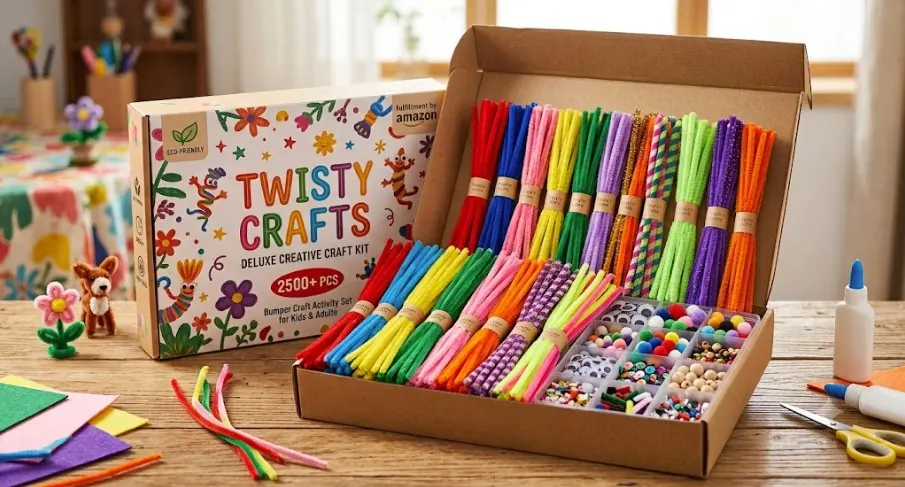
Introduction
Short answer: Wholesale buyers should evaluate chenille stems by intended application, diameter, length, wire flexibility, pile coverage, color accuracy, packaging format, labeling requirements, production consistency and supplier communication. The cheapest quote is rarely the best quote unless the product specification, packing method and quality standard are identical.
Chenille stems, also called pipe cleaners in many markets, look simple at first glance: a soft fuzzy material wrapped around a flexible wire core. For purchasing teams, however, the product becomes more complex once it enters a wholesale, retail, school supply, craft kit or private label program. A buyer must decide which size is suitable, how many colors to include, whether the stems need glitter or solid finish, how the pieces should be counted, how retail packaging should be built and what quality checks should be completed before shipment.
This guide is written for B2B buyers rather than hobby users. It focuses on the practical sourcing decisions behind wholesale chenille stems: product types, specifications, color systems, packaging options, quality control, supplier questions and common mistakes. If you are building a craft range, importing seasonal products, planning a DIY kit or comparing pipe cleaner manufacturers, use this article as a procurement checklist before requesting samples or placing a bulk order.
Table of Contents
- What are chenille stems?
- Chenille stems vs pipe cleaners
- Main product types buyers should know
- Chenille stem size guide
- Color selection and custom ratios
- Packaging and private label options
- Quality control checklist
- Questions to ask a manufacturer
- FAQ
What Are Chenille Stems?
Chenille stems are flexible craft stems made by combining a wire core with soft fibers to create a fuzzy, bendable material. They are used in craft kits, classroom projects, holiday decorations, floral designs, party supplies, retail DIY sets and many children’s creative products. The product is popular because it is lightweight, easy to shape, inexpensive to pack and visually colorful.
From a buyer’s point of view, a chenille stem is not just a craft material. It is a configurable product. A supplier can adjust length, diameter, fiber density, wire stiffness, color, glitter finish, count per pack and packaging style. That flexibility is useful, but it also means the buyer must communicate specifications clearly. “Pipe cleaners” alone is not a sufficient purchase specification for wholesale production.
For example, a school craft pack may need soft 6 mm stems in bright assorted colors with simple bag packaging. A premium holiday kit may need thicker glitter stems, themed color ratios and retail box presentation. A marketplace seller may need barcode labels, carton marks and exact piece counts to meet fulfillment requirements. The same basic product category can serve very different buyer needs.
Chenille Stems vs Pipe Cleaners: Are They the Same?
In modern craft supply purchasing, the terms “chenille stems” and “pipe cleaners” are often used interchangeably. Both usually describe a bendable wire stem covered with fuzzy fiber. In some markets, “pipe cleaner” is the more common search term; in others, “chenille stem” sounds more professional for craft and educational products.
The difference is mostly about context. Historically, pipe cleaners were used for cleaning pipes or narrow tubes. Today, most wholesale buyers searching for pipe cleaners are actually looking for craft-grade chenille stems. When communicating with suppliers, it is safer to specify the intended use: craft, school, decorative, cleaning, floral or retail kit. This avoids confusion about softness, finish, safety and packaging.
For SEO and product listings, both terms matter. A retail pack may use “pipe cleaners” because consumers search that phrase. A B2B specification sheet may use “chenille stems” because it sounds more precise. Many successful import programs include both terms in titles, labels and product descriptions.
Main Product Types Buyers Should Know
Standard chenille stems
Standard chenille stems are the core product for most wholesale programs. They usually come in solid colors and are used for schools, craft stores, general DIY kits, party activities and children’s art supplies. Standard stems are often chosen when the buyer needs consistent color, large quantity and predictable pricing.
When sourcing standard stems, focus on pile coverage, wire flexibility, color consistency and piece count accuracy. If the stem is too thin, it may look cheap in retail packaging. If the wire is too stiff, children may find it difficult to shape. If the wire is too soft, finished crafts may not hold their form.
Glitter chenille stems
Glitter chenille stems use metallic or reflective fibers to create a sparkling finish. They are common in Christmas, Easter, party, costume, floral and premium craft kits. Buyers often use glitter stems to increase perceived retail value because the product looks more decorative on shelf and in online photos.
The key quality concerns are sparkle consistency, fiber shedding, flexibility and color matching. Glitter products may look excellent in images but vary in hand feel, so sample approval is important before bulk production.
Mixed color sets
Mixed color chenille stem sets are designed around a specific color ratio. A buyer may request rainbow packs, pastel packs, seasonal combinations, brand colors or education-focused assortments. Mixed packs are especially important for retail kits because the color balance affects customer satisfaction.
Buyers should specify exact piece counts per color rather than simply asking for “assorted colors.” For example, “100 pieces per pack: 10 colors × 10 pieces each” is much clearer than “100 pieces mixed.” Exact ratios reduce disputes and make repeat orders easier.
Chenille Stem Size Guide
Size is one of the first specifications a buyer should confirm. The most common craft stems are around 30 cm long, with common diameters such as 6 mm, 7 mm and 8 mm. Some programs may request thicker stems for plush appearance or thinner stems for detailed craft work. For a deeper comparison, see the dedicated Chenille Stem Size Guide.
| Specification | Common option | Buying note |
|---|---|---|
| Diameter | 6 mm, 7 mm, 8 mm | Thicker stems look fuller but may increase material cost and carton volume. |
| Length | Approx. 30 cm | Confirm whether tolerance is acceptable for your packaging and application. |
| Wire stiffness | Soft, medium or firmer | Choose based on age group, craft use and whether shapes must hold. |
| Finish | Standard, glitter, mixed | Finish affects appearance, packing, cost and target market. |
A purchasing mistake is to focus only on length and ignore diameter or hand feel. Two stems may both be described as 30 cm pipe cleaners but look very different in retail packaging. Always compare physical samples under the same size, color and packing conditions.
Color Selection and Custom Ratios
Color is central to chenille stem purchasing. Buyers may choose from an existing pipe cleaner color chart, request custom matching or build mixed color ratios for a specific product line. For school supplies, bright primary colors may be more important. For premium craft kits, pastel or coordinated palettes can improve perceived value. For seasonal products, color combinations often matter more than individual colors.
When planning colors, buyers should separate three decisions: available colors, approved colors and pack ratio. Available colors are the supplier’s color library. Approved colors are the exact samples you confirm. Pack ratio is the number of pieces of each color in the final pack. A clear color process helps avoid later disputes about “similar but not exact” shades.
Digital colors are useful for initial selection, but screen colors are never a perfect production standard. For serious wholesale orders, physical samples should be approved before mass production. If you sell through retail or marketplaces, keep one approved production reference sample for future repeat orders.
Packaging and Private Label Options
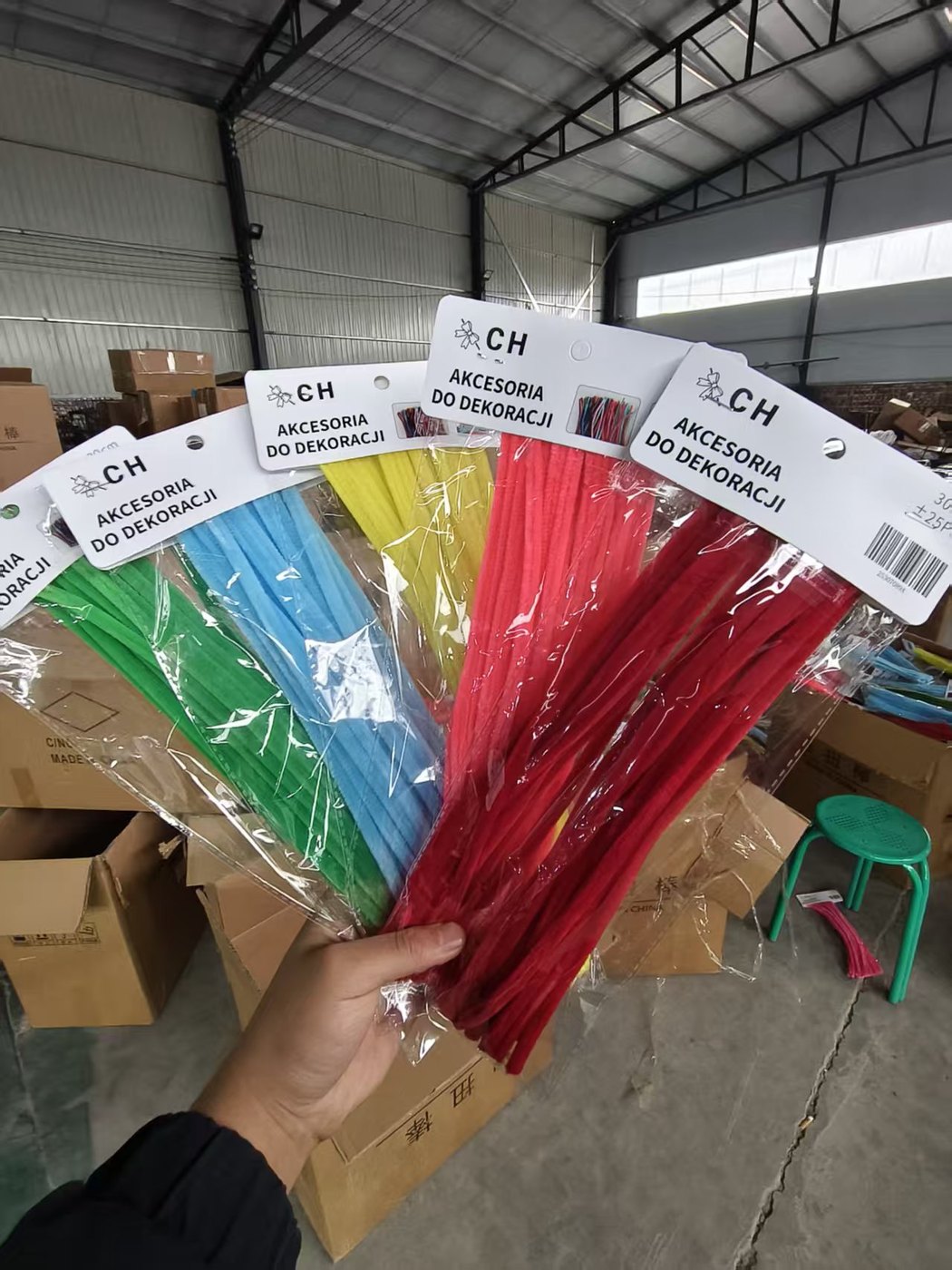
Packaging can change the success of a chenille stem program. Bulk buyers may only need simple polybags and cartons, while craft brands may need private label bags, header cards, printed boxes, instruction inserts, barcode labels, multilingual labels and marketplace carton marks.
Common packaging formats include bulk bags, retail hanging packs, header card bags, gift boxes, craft kit boxes and mixed component kits. For Amazon or marketplace sellers, packaging must consider barcode placement, scannability, product protection, carton label requirements and customer unboxing experience.
Private label packaging should be discussed early because it affects lead time, artwork approval, MOQ, printing cost and inspection steps. Buyers should prepare logo files, barcode data, warning statements, language requirements and target pack dimensions before asking for a final quotation. If packaging is not confirmed, the quote may look attractive but fail to represent the real landed product.
Wholesale Quality Control Checklist
Quality control for chenille stems is practical and visual. A buyer does not need a complicated laboratory process for every order, but the inspection checklist should match the market and product use. For children’s products and school supplies, sharp wire ends, loose fibers and safety expectations matter. For retail products, visual consistency and packing accuracy matter. For craft kit brands, color ratio and component count matter.
Key inspection points
- Pile coverage: fibers should cover the wire evenly without obvious gaps.
- Wire flexibility: stems should bend smoothly and hold shape according to the intended use.
- Length and diameter: samples and bulk production should remain within agreed tolerance.
- Color consistency: compare bulk production against approved samples under neutral light.
- Shedding: excessive fiber loss can affect perceived quality and customer reviews.
- Ends and safety: check whether wire tips are acceptable for the target age group and market.
- Piece count: verify total pack count and color-by-color count for mixed sets.
- Packaging: confirm seals, labels, barcodes, carton marks and retail presentation.
A professional chenille stem factory should be able to explain its production process, sample approval method, color management and final inspection steps. Buyers do not need perfection in every detail, but they do need repeatability. Repeatability is what makes a product line scalable.
Questions to Ask a Chenille Stem Manufacturer
Before placing a wholesale order, ask questions that reveal whether the supplier understands your market, not only whether the supplier can quote a low price.
- What diameters and lengths do you produce regularly?
- Can you provide a current physical color chart?
- Can you produce exact mixed color ratios per pack?
- What packaging formats do you support?
- Can you support private label artwork, barcode labels and carton marks?
- What is the sample lead time and bulk production lead time?
- How do you control color consistency between repeat orders?
- What inspection points are checked before shipment?
- Can you provide photos or videos during production?
- What information do you need to give an accurate quote?
Good suppliers answer these questions clearly. If a supplier only responds with a price and does not ask about size, color ratio, packaging or destination market, the quote may be incomplete.
FAQ
What are chenille stems used for in wholesale programs?
They are used for craft kits, school supplies, seasonal decorations, DIY retail packs, floral designs, party products and private label creative sets.
Are chenille stems the same as pipe cleaners?
In most craft supply markets, yes. The terms are often used interchangeably, although “pipe cleaner” can also describe functional cleaning products in some contexts.
What size chenille stems should I buy?
Common craft sizes include 6 mm, 7 mm and 8 mm diameter stems around 30 cm long. The best size depends on the target market, craft application, packaging and desired product appearance.
Can chenille stems be customized?
Yes. Buyers can customize colors, color ratios, length, diameter, finish, packaging, labels, barcodes, header cards, boxes and carton marks.
How do I compare chenille stem quotes?
Compare quotes only after confirming the same diameter, length, color mix, finish, count per pack, packaging format, carton requirement and inspection standard.
Do I need physical samples before ordering?
For serious wholesale orders, yes. Physical samples help confirm color, hand feel, flexibility, pile coverage and packaging before bulk production.
What packaging is best for retail?
Retail packaging depends on channel. Hanging bags, header cards and boxes work for stores; barcode labels, compact packs and carton marks are important for marketplace fulfillment.
What information should I send for a quotation?
Send product type, size, colors, color ratio, quantity, pack count, packaging style, destination country, labeling requirements and target delivery time.
Conclusion
Buying chenille stems in bulk is not difficult, but it does require clear specifications. The best sourcing results come from matching product type, size, color, packaging and quality expectations to the final market. A buyer who defines these details early will receive more accurate quotations, better samples and fewer production surprises.
If you are at the planning stage, start with three decisions: which product type you need, which colors or ratios you want and how the final pack should look to your customer. Then compare suppliers based on their ability to produce consistently, communicate clearly and support the packaging requirements of your sales channel.
Related Articles
Need help specifying a wholesale chenille stem order?
Send your target size, colors, quantity, packaging style and destination country. We can help you turn a general product idea into a clear factory quotation.