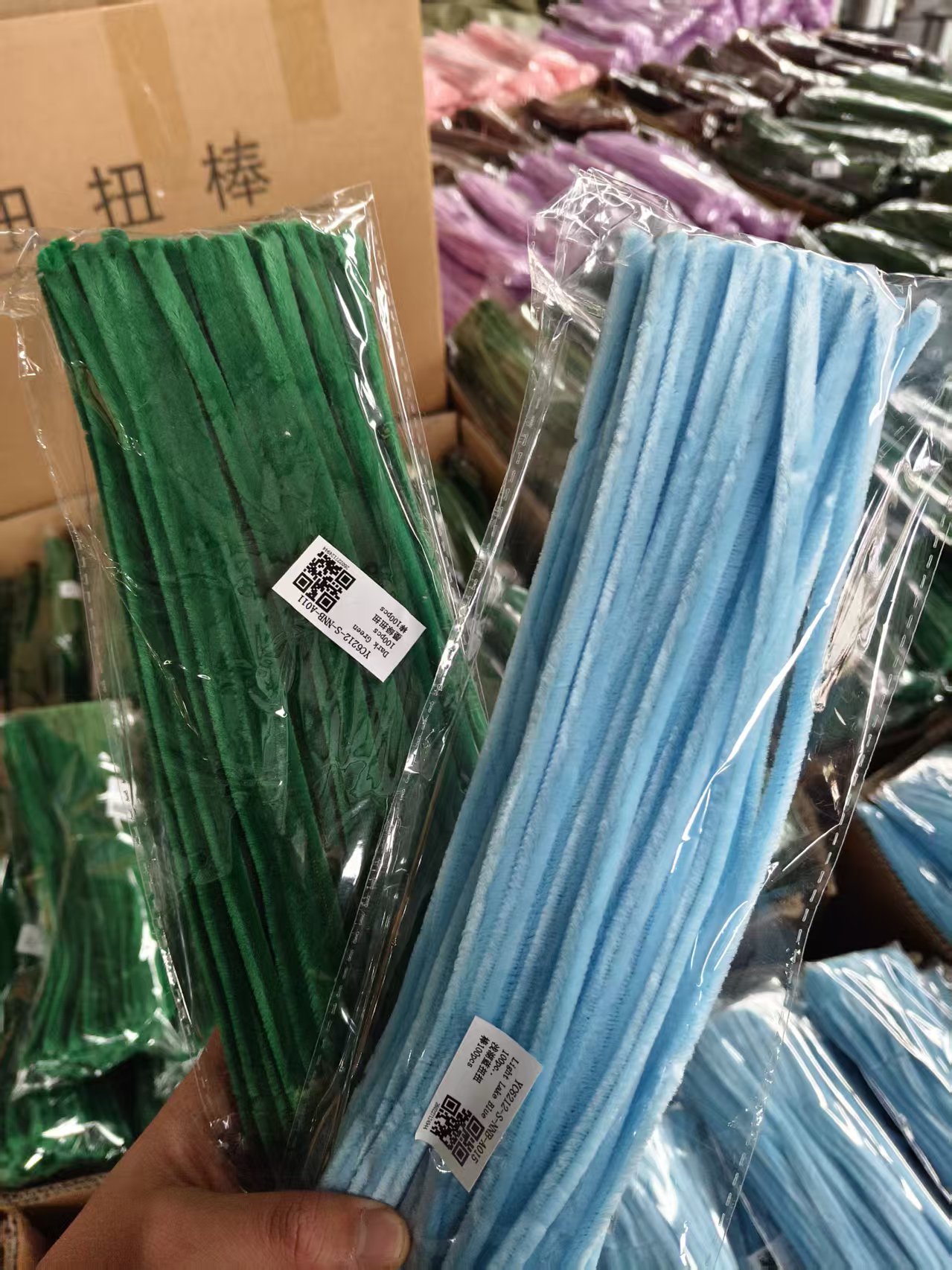
Introduction
Direct answer: The most common chenille stem sizes for craft and retail use are 6 mm, 7 mm and 8 mm in diameter, usually around 30 cm long. 6 mm is suitable for standard school craft packs and cost-sensitive wholesale assortments; 7 mm offers a fuller mid-range feel; 8 mm is better for premium retail packs, decorations, seasonal products and projects that need stronger visual volume.
Chenille stem size looks like a simple specification, but it affects almost every buying decision: product appearance, wire feel, bending performance, packaging size, carton quantity, shipping volume, shelf presentation and customer perception. A buyer who only asks for “pipe cleaners” without defining diameter and length may receive quotes that are impossible to compare fairly.
This chenille stem size guide is written for buyers, purchasing managers, importers, wholesalers, craft brands, school supply distributors and DIY kit companies. It explains how to choose between 6 mm, 7 mm, 8 mm and custom sizes, how size affects packaging and cost, and what information to include in a professional wholesale specification.
Table of Contents
- Why chenille stem size matters
- Common chenille stem sizes
- 6 mm chenille stems
- 7 mm chenille stems
- 8 mm chenille stems
- Length and cutting options
- Wire stiffness and shape retention
- How size affects packaging and freight
- How to write a size specification
- FAQ
Why Chenille Stem Size Matters
Size is one of the first specifications buyers should confirm when sourcing chenille stems. Diameter controls how full the stem looks. Length controls how the stem can be used. Wire stiffness controls how it bends and holds shape. These variables together decide whether the product feels suitable for a classroom project, retail craft pack, seasonal decoration, floral design or premium DIY kit.
The size also affects cost. A thicker stem normally uses more material and takes more space. A longer stem increases material use and changes packing efficiency. For large wholesale orders, small size differences can influence carton quantity, shipping volume and landed cost. That is why a low quote is not meaningful unless the size is exactly matched.
Size is also linked to brand positioning. A budget school pack may perform well with a standard 6 mm stem. A premium gift box or holiday decoration kit may look more attractive with 7 mm or 8 mm stems. The best size is not always the thickest; it is the size that fits the application, price point and packaging plan.
Common Chenille Stem Sizes
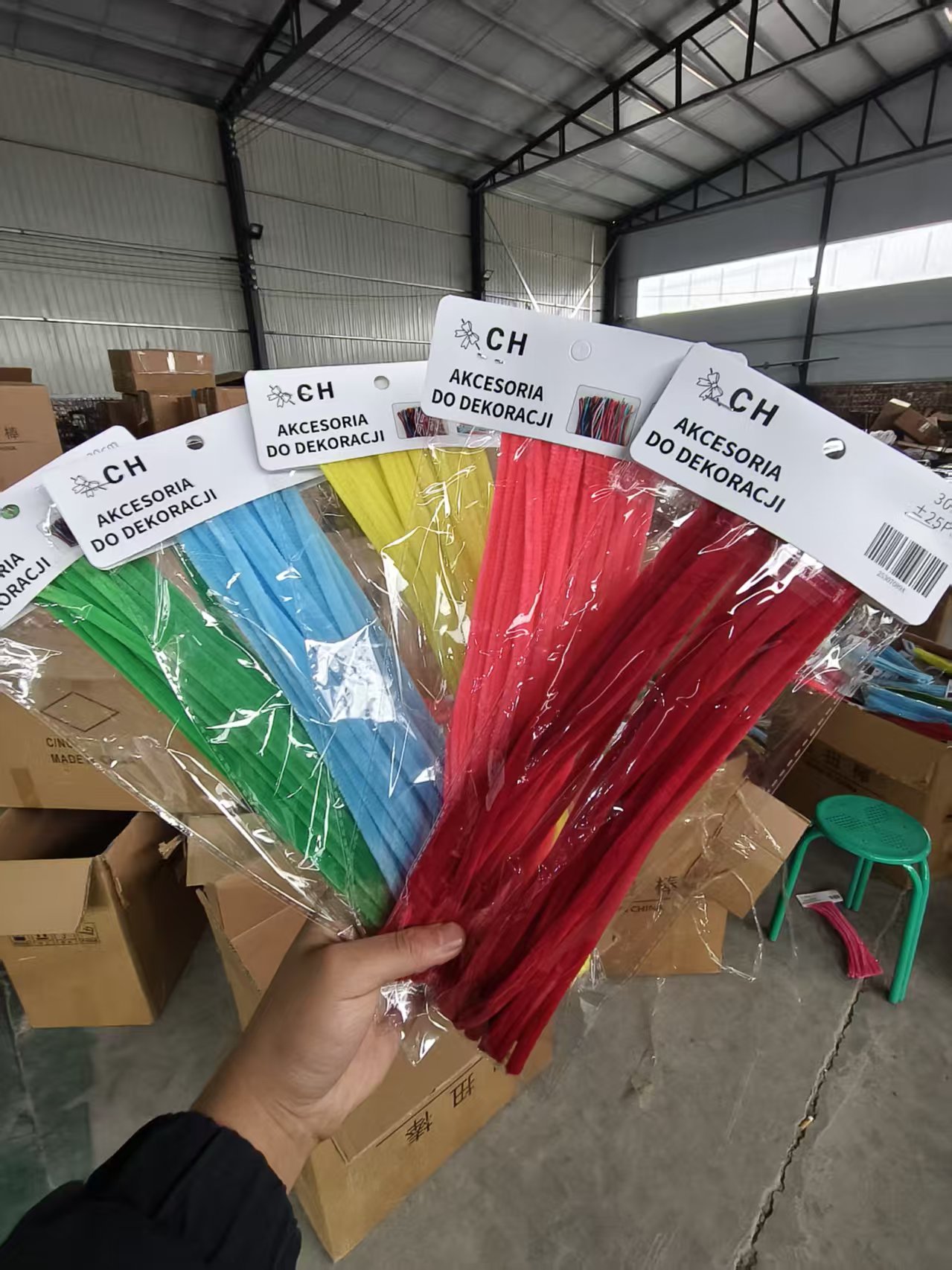
For craft and retail programs, common chenille stem diameters include 6 mm, 7 mm and 8 mm. Many buyers also request custom diameters, special lengths or mixed size assortments. The most common length is around 30 cm, but shorter or longer stems may be used for kits, decorations or packaging constraints.
| Size | Typical use | Buyer notes |
|---|---|---|
| 6 mm × 30 cm | Standard craft packs, school supplies, bulk wholesale | Good balance of cost, flexibility and packing efficiency. |
| 7 mm × 30 cm | Mid-range retail packs, craft kits, mixed assortments | Fuller appearance while still practical for many price points. |
| 8 mm × 30 cm | Premium packs, decorations, seasonal products | Stronger visual volume; may increase carton volume and cost. |
| Custom sizes | Private label kits, special applications, brand programs | Confirm MOQ, tolerance, lead time and sample approval process. |
When comparing sizes, buyers should request physical samples. Photos can show color and general appearance, but they cannot fully communicate hand feel, bendability, pile density or package volume. For repeat orders, keep an approved sample as a production reference.
6 mm Chenille Stems: Standard and Cost-Efficient
6 mm chenille stems are a common choice for standard craft products. They are flexible, easy to pack and suitable for school projects, children’s crafts, classroom activities, party crafts and basic retail assortments. For many wholesalers, 6 mm is the practical starting point because it balances usability and cost.
This size works well when the buyer wants high piece counts, broad color variety and efficient packaging. A 100-piece or 200-piece assortment can remain compact enough for retail display and shipping. For importers serving education channels, the product is easy for users to bend and shape.
The limitation is visual fullness. If the product is photographed for premium packaging or used in larger decorations, 6 mm may look thinner than desired. It can still be the right choice, but buyers should match it with the target market. A value pack can succeed with 6 mm; a premium gift kit may need a fuller size.
7 mm Chenille Stems: A Balanced Mid-Range Option
7 mm chenille stems sit between standard and premium positioning. They provide a fuller appearance than 6 mm while remaining practical for many retail packs and wholesale cartons. Buyers often consider 7 mm when they want the product to look better in packaging without moving fully into a thick premium specification.
This size is useful for craft brands that sell mixed color sets, DIY kits or private label packs. It can improve perceived value while keeping the product flexible enough for hand shaping. In photos and clear packaging, 7 mm stems usually look more substantial than 6 mm stems.
For procurement teams, 7 mm can be a smart compromise. It may help a retail pack stand out without increasing volume as much as 8 mm. As always, the final decision should be based on sample comparison, packaging dimensions and target price.
8 mm Chenille Stems: Fuller Appearance for Premium Use
8 mm chenille stems are often chosen when buyers want stronger visual impact. The thicker diameter gives the stem more presence, which can be helpful for holiday decorations, floral projects, premium retail packs and craft kits where the finished item needs volume.
For Christmas, Easter, Halloween and seasonal craft programs, 8 mm stems can make the product feel richer. They may also work well in gift boxes or branded craft kits where the unboxing experience matters. When combined with glitter finish or custom color ratios, thicker stems can support a more premium product position.
The tradeoff is cost and packing volume. Thicker stems may reduce the number of pieces per carton or require larger packaging. Buyers should evaluate total landed cost, not only unit price. If the product is sold online, dimensional weight and warehouse fees may matter as much as the factory price.
Length and Cutting Options
Diameter is only half of the size discussion. Length is equally important. A common craft length is around 30 cm, which is suitable for many projects and easy to communicate in wholesale specifications. However, buyers may need shorter lengths for kits or longer stems for special decorative applications.
Shorter stems can reduce waste in kits where the user only needs a small piece. They may also help create compact packaging. Longer stems are useful for larger decorations, floral wrapping or designs that require more shaping room. If the product will be cut by the end user, standard length may be more convenient.
When requesting custom length, confirm tolerance and cutting quality. Buyers should ask whether the cut ends are consistent and whether the wire tips are acceptable for the target market. For children’s craft products, packaging warnings and age recommendations should be reviewed carefully.
Wire Stiffness and Shape Retention
Two chenille stems with the same diameter can behave differently if the wire core is different. A softer wire is easier to bend and may be better for younger users. A firmer wire holds shape better and may be useful for decorations, floral work or structured crafts. Wire stiffness should be considered together with diameter.
For school supplies, easy bending is often a benefit. For craft kits that include flowers, animals or ornaments, the stem may need to hold a more defined shape. For retail assortments, a balanced wire is usually preferred: flexible enough for hand shaping but firm enough to keep the finished form.
Buyers should test the stem by bending, twisting and reshaping it. If the product will be used with beads, pom poms, felt or other kit components, test it with the actual components. A size that looks correct on paper may feel different in real assembly.
How Size Affects Packaging and Freight
Size has a direct impact on packaging. Thicker stems require more space inside bags, boxes and cartons. If the pack count remains the same, moving from 6 mm to 8 mm may require larger packaging or tighter compression. This can affect retail appearance and freight cost.
For mixed color sets, diameter also affects how the colors look together. Thicker stems show color more strongly, while thinner stems allow more pieces in a compact pack. For glitter chenille stems, thicker sizes may increase visual sparkle but can also change packing volume.
Packaging should be discussed before final quotation. A supplier may quote the stem itself, but the buyer also needs to know pack size, bag dimensions, box dimensions, carton quantity and gross weight. For marketplace sellers, barcode placement and carton labels should be included early.
How to Write a Chenille Stem Size Specification
A strong specification makes supplier communication faster and price comparison more reliable. Instead of asking for “pipe cleaners,” buyers should describe the complete product. A practical example is:
Example: Craft chenille stems / pipe cleaners, 7 mm diameter × 30 cm length, assorted pastel colors, 100 pieces per retail bag, color ratio confirmed by sample, custom header card, barcode label, export carton marks, for the U.S. craft retail market.
This specification tells the manufacturer what to quote and what to sample. It also reduces later misunderstandings about diameter, length, color mix and packaging. If you need private label or retail-ready packaging, include artwork, label language, barcode information and carton requirements as early as possible.
Buyer specification checklist
- Product name: chenille stems, pipe cleaners or both
- Diameter: 6 mm, 7 mm, 8 mm or custom
- Length: standard 30 cm or custom length
- Wire stiffness and shape retention expectation
- Finish: standard, glitter or other special finish
- Color list and color ratio per pack
- Piece count per bag, box and carton
- Packaging format and label requirements
- Destination market and sales channel
- Sample approval and inspection requirements
Common Size-Selection Mistakes
Comparing prices without matching diameter
A 6 mm product and an 8 mm product are not the same quote. Always confirm diameter before comparing supplier prices.
Ignoring packaging volume
A thicker stem may look better but can increase bag size, carton size and freight cost. Evaluate the full landed cost.
Choosing the thickest size automatically
Premium appearance is useful, but some users prefer easier bending. Match the size to the application.
Approving size only from photos
Photos cannot fully show hand feel, stiffness or packing density. Request physical samples before bulk production.
Forgetting tolerance
Every production process has tolerance. Buyers should agree on acceptable size variation, especially for private label programs.
FAQ
What is the most common chenille stem size?
Common craft sizes include 6 mm, 7 mm and 8 mm diameter, usually around 30 cm long. 6 mm is often used for standard craft packs, while 7 mm and 8 mm offer a fuller appearance.
Are 6 mm chenille stems suitable for school supplies?
Yes. 6 mm stems are widely used for school crafts and classroom products because they are flexible, cost-efficient and easy to pack in larger quantities.
When should buyers choose 8 mm chenille stems?
Choose 8 mm when the product needs stronger visual volume, premium presentation, seasonal decoration use or better impact in retail packaging.
Can chenille stem length be customized?
Yes. Length can often be customized, but buyers should confirm MOQ, tolerance, cutting quality, packaging changes and lead time.
Does a thicker stem always mean better quality?
No. A thicker stem may look fuller, but quality also depends on pile coverage, wire performance, color consistency, shedding, packaging and inspection.
What size is best for retail craft kits?
It depends on the kit. 6 mm works for value packs and school kits, 7 mm is a balanced retail option, and 8 mm is useful for premium or decorative kits.
How should I compare quotes from different suppliers?
Compare the same diameter, length, finish, color ratio, pack count and packaging. Otherwise, the lowest price may simply be a different product.
Can glitter chenille stems use the same sizes?
Yes. Glitter chenille stems can be made in common sizes, but finish, visual effect and packing volume should be checked with samples.
Conclusion
Chenille stem size is a practical sourcing decision, not just a product detail. 6 mm, 7 mm and 8 mm stems can all be correct depending on the market, application, price point and packaging plan. For wholesale buyers, the best size is the one that matches how the product will be sold and used.
Before confirming an order, request samples, compare diameter and wire feel, check packaging volume and write a complete specification. This will make supplier communication clearer, reduce quotation mistakes and help your product perform better in retail, school supply, craft kit or seasonal channels.
Related Articles
Need help choosing 6mm, 7mm or 8mm?
Tell us your target market, packaging format, piece count and application. We can recommend a practical chenille stem size and prepare samples for comparison.