Introduction
Chenille stems are bendable craft stems made from a flexible wire core covered with soft fuzzy fibers. They are also widely called pipe cleaners. Wholesale buyers use them in school craft supplies, DIY kits, holiday decorations, floral designs, retail packs, private label craft products and mixed creative sets.
For consumers, chenille stems are simple craft materials. For buyers, importers and craft brands, they are a configurable product with many purchasing variables: diameter, length, wire stiffness, fiber density, finish, color, color ratio, pack count, packaging style and quality standard. A buyer who understands these variables can create a better retail product, compare supplier quotes more accurately and reduce the risk of production mistakes.
This article explains what chenille stems are from a procurement perspective. It is designed for purchasing managers, importers, wholesalers, craft brands, DIY brands and marketplace sellers who need to source pipe cleaners or chenille stems in bulk. Instead of focusing on craft tutorials, it explains the structure, specifications, applications and sourcing checks that matter before requesting a sample or placing a wholesale order.
Table of Contents
- Definition of chenille stems
- How chenille stems are structured
- Why they are also called pipe cleaners
- Common applications
- Key specifications buyers should know
- Quality factors
- Packaging options
- How to source chenille stems wholesale
- FAQ
Definition of Chenille Stems
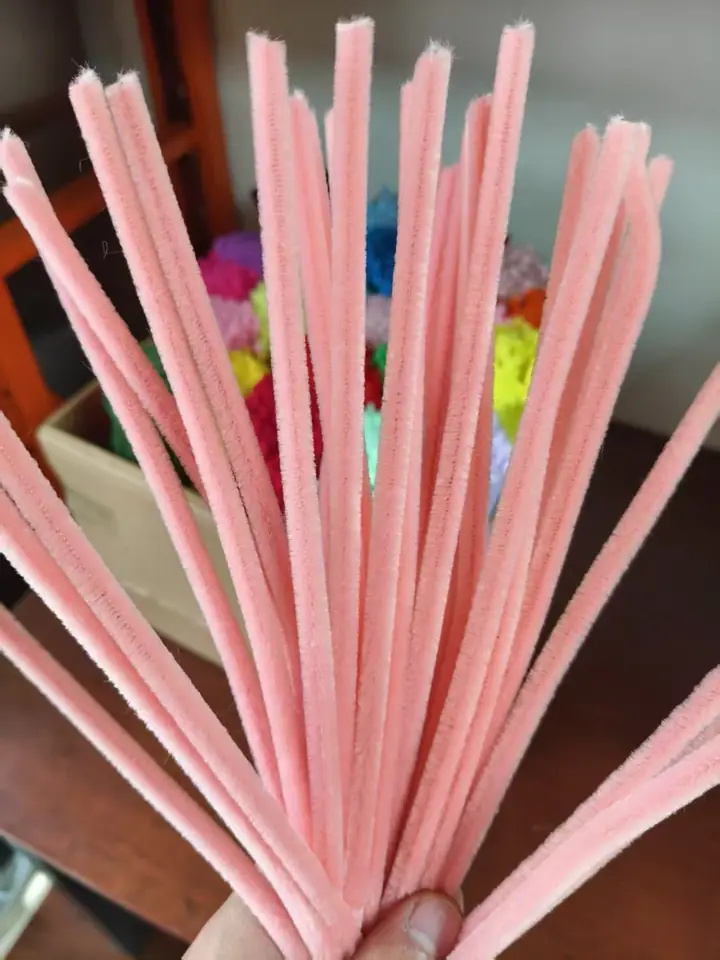
Chenille stems are flexible wire-based stems with a soft pile surface. The word “chenille” refers to the fuzzy texture, while “stem” describes the long bendable form. In the craft industry, the product is commonly used because it can be twisted, wrapped, bent, cut, shaped and combined with other craft components.
A typical chenille stem looks like a colorful fuzzy stick. It can be straight in packaging, then shaped by hand into letters, animals, flowers, ornaments, classroom projects or decorative forms. The material is lightweight, low-cost, visually bright and easy to pack. These features make it suitable for large retail programs, school supply catalogs, seasonal promotions and DIY kits.
For wholesale buyers, the important point is that chenille stems are not one fixed product. A “chenille stem” can be a standard solid-color stem, a glitter metallic stem, a mixed color set, a seasonal craft kit component or a private label retail pack. The correct specification depends on how the buyer plans to sell or use the product.
How Chenille Stems Are Structured
Most craft chenille stems have two basic components: a wire core and a fuzzy fiber covering. The wire gives the product shapeability. The fiber creates softness, color and visual volume. During production, fibers are held around the wire so the final stem can bend while keeping a fuzzy surface.
The wire core is important because it determines how the stem behaves in use. A softer wire is easier for children to bend but may not hold a complex shape as firmly. A firmer wire can support decorative structures but may feel harder to shape. Buyers should choose wire stiffness according to the end user and application.
The fiber surface is equally important. Good pile coverage makes the stem look full and consistent. Thin coverage can expose the wire or make the product look cheap in retail packaging. Fiber density, color consistency and shedding resistance all affect customer perception. When comparing samples from different suppliers, buyers should not only look at color; they should also touch and bend the stem.
| Component | Function | Buyer check |
|---|---|---|
| Wire core | Provides flexibility and shape retention | Check stiffness, bending feel and wire tip safety. |
| Fiber pile | Creates softness, color and fuzzy appearance | Check coverage, density, shedding and consistency. |
| Finish | Defines visual style such as standard or glitter | Check whether the finish matches market positioning. |
| Packaging | Controls retail presentation and logistics | Check count, labels, barcode, seal and carton marks. |
Why Chenille Stems Are Also Called Pipe Cleaners
Chenille stems are often called pipe cleaners because the original product category was associated with cleaning pipes and narrow tubes. Over time, the same bendable fuzzy structure became popular as a craft material. In modern retail and wholesale craft markets, the two terms often refer to the same product.
However, the search intent can be different. A buyer searching “pipe cleaners” may want general craft sticks, school supplies or retail craft packs. A buyer searching “chenille stems” may be using a more professional sourcing term. For product pages and marketplace listings, many sellers use both terms to capture demand: “chenille stems / pipe cleaners.”
If you are sourcing from a manufacturer, always specify the intended use. Craft-grade chenille stems for children’s projects may not be the same as functional cleaning pipe cleaners. The intended application affects softness, packaging warnings, diameter, fiber type and inspection standards.
Common Applications for Chenille Stems
School and classroom projects
Chenille stems are widely used in schools because they are easy to handle, colorful and suitable for creative activities. Buyers serving education channels usually care about bright colors, soft hand feel, safe packaging and reliable piece counts.
Retail craft packs
Retail craft packs often include assorted colors and a clear quantity claim on the package. The product must look attractive through the bag or box. For this channel, color balance and packaging presentation are as important as the stem itself.
DIY and craft kits
DIY brands use chenille stems as components in kits that may also include pom poms, beads, felt, glue, craft eyes or wires. In this case, the stem specification must match the kit instructions and the expected finished project.
Holiday and seasonal decorations
Christmas, Easter, Halloween and party products often use glitter chenille stems or themed color combinations. Seasonal buyers should plan earlier because packaging artwork, color matching and production slots can affect lead time.
Floral and decorative designs
Florists and decoration brands may use chenille stems for wrapping, shaping and creating soft decorative accents. These buyers may prefer more controlled colors, specific wire stiffness and consistent texture.
Key Specifications Buyers Should Know
A clear specification is the foundation of a good wholesale order. Without it, suppliers may quote different products, making price comparison unreliable. At minimum, buyers should define diameter, length, color, finish, count per pack, packaging format and carton requirements.
Diameter and length
Common craft diameters include 6 mm, 7 mm and 8 mm, with a common length around 30 cm. Thicker stems look fuller but can increase material cost and shipping volume. Thinner stems may be better for detailed craft work but may look less premium in retail packaging. For more detail, compare common options in the Chenille Stem Size Guide.
Color and color ratio
Color can be selected from a standard pipe cleaner color chart, approved by physical sample or customized for a specific brand or season. Mixed packs should define exact ratios. For example, “100 pieces, 10 colors, 10 pieces per color” is clearer than “100 pieces assorted.”
Finish
The most common finishes are standard solid color and glitter metallic. Standard chenille stems are suitable for general craft and education use. Glitter chenille stems are often used for seasonal and premium craft products.
Pack count and packaging
Buyers should define whether stems are packed in bulk cartons, polybags, header card bags, boxes or complete craft kits. Pack count affects retail positioning, barcode setup, carton size and inspection process.
Quality Factors That Matter in Bulk Orders
Quality in chenille stems is mostly about consistency. A single sample may look acceptable, but a wholesale program needs thousands or millions of pieces to look and perform the same. Buyers should check visual appearance, hand feel, bending performance, color consistency and packaging accuracy.
- Pile coverage: The fuzzy surface should be even, without obvious bare wire areas.
- Color consistency: Bulk production should match the approved sample as closely as possible.
- Flexibility: Stems should bend smoothly and hold the expected shape.
- Wire tip condition: Ends should be appropriate for the target age group and market.
- Shedding: Excessive fiber loss can create complaints or poor reviews.
- Count accuracy: Retail packs and mixed sets must contain the correct piece count.
- Packaging quality: Bags, seals, labels and cartons must survive shipping and retail handling.
Before placing a major order, request production samples or pre-production samples. A reliable factory should be able to discuss its quality control process and show how it checks dimensions, color, count and packaging. You can also review a supplier’s factory overview to understand its production and inspection capabilities.
Packaging Options for Chenille Stems
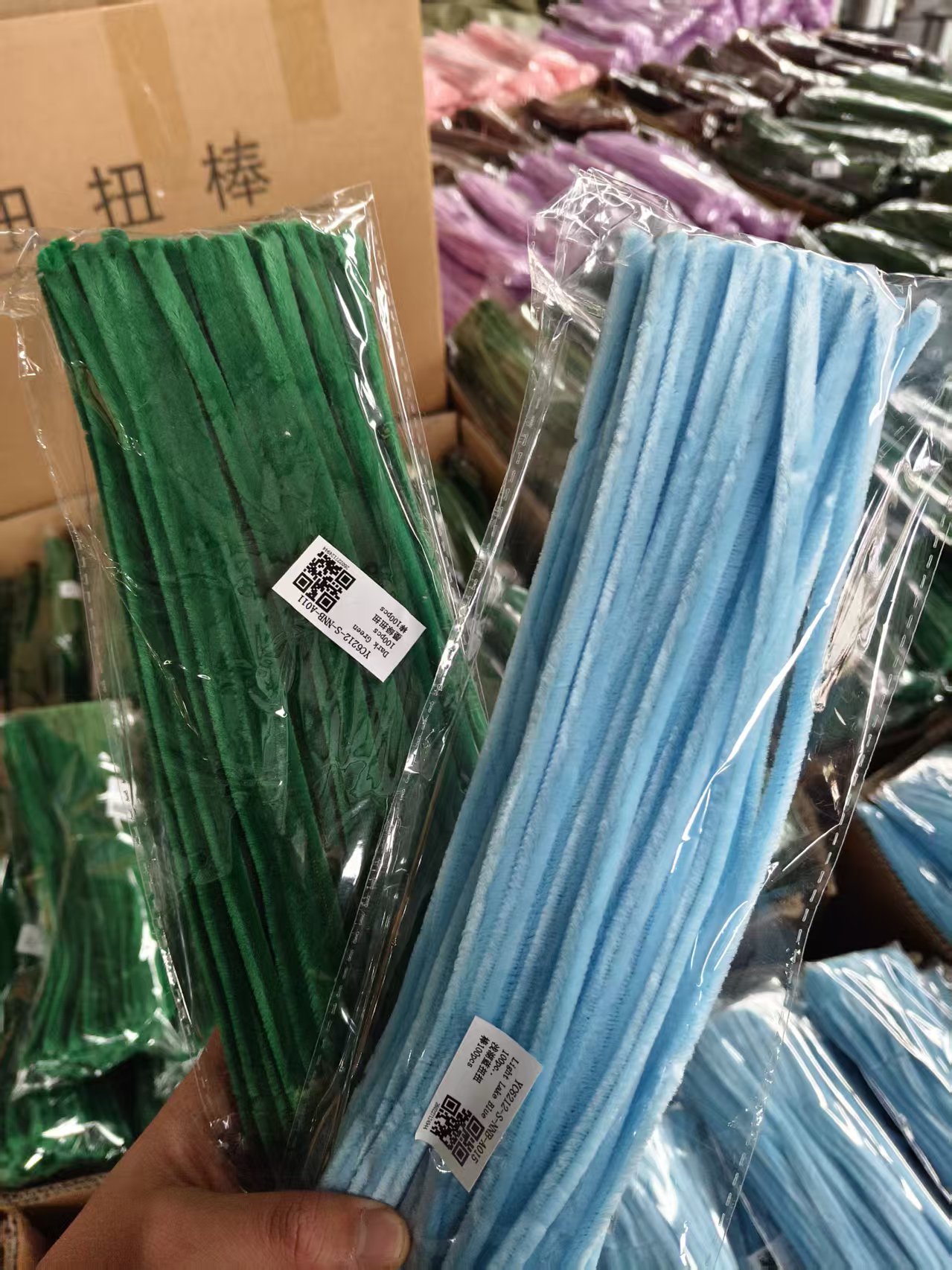
Packaging turns a basic craft material into a sellable retail product. For B2B buyers, packaging also affects logistics, compliance, barcode setup, display style and customer perception. The same chenille stem can be sold as a simple bulk supply item or as a premium DIY kit depending on the packaging design.
Common packaging options include bulk bags, simple retail bags, header card packs, hanging packs, printed boxes, gift boxes and multi-component craft kits. For marketplace sellers, barcode labels and carton marks may be required. For retailers, front-of-pack clarity and shelf presentation may matter more. For schools, simple and durable packaging may be preferred.
If you plan to sell under your own brand, prepare logo files, barcode numbers, warning text, language requirements and target pack dimensions before final quotation. Packaging artwork and printing can affect lead time, so it should not be treated as a last-minute detail.
How to Source Chenille Stems Wholesale
When sourcing chenille stems, avoid asking only for a general price. Instead, prepare a clear buying brief. The brief should include product type, diameter, length, colors, color ratio, count per pack, packaging format, target market, order quantity and destination country. This allows suppliers to quote the same product and reduces misunderstandings.
Buyers should compare suppliers using both price and execution ability. A slightly lower price may not be useful if color matching is weak, packaging communication is slow or repeat order consistency is poor. For craft brands and retail buyers, supplier reliability often affects customer reviews more than small differences in unit cost.
A practical sourcing process is: define specifications, request samples, approve colors and packaging, confirm quote, approve pre-production sample, inspect production and keep reference samples for repeat orders. This process is especially important for mixed color sets and private label programs.
FAQ
What are chenille stems?
Chenille stems are flexible craft stems made from a wire core covered with soft fuzzy fibers. They are used in crafts, school projects, decorations, floral work, DIY kits and retail creative products.
Are chenille stems the same as pipe cleaners?
In craft supply markets, the terms are often used for the same product. However, pipe cleaners can also refer to cleaning products, so buyers should clarify the intended use.
What are chenille stems made of?
Most craft chenille stems are made with a flexible wire core and synthetic pile fibers such as polyester. The exact material and stiffness depend on the specification.
What sizes are common?
Common wholesale craft sizes include 6 mm, 7 mm and 8 mm diameter stems around 30 cm long. Custom sizes may be available depending on production capability.
Are chenille stems safe for children?
They are widely used in school and craft products, but buyers should confirm age grading, wire end condition, warnings and local market requirements before selling them for children.
Can chenille stems be customized?
Yes. Custom options include color, color ratio, size, finish, pack count, private label packaging, barcode labels and carton marks.
What information should I send for a quote?
Send diameter, length, color list, color ratio, quantity, packaging format, pack count, destination country and any labeling or compliance requirements.
Conclusion
Chenille stems are simple in appearance but flexible in specification. For wholesale buyers, the key is to define the product clearly before comparing prices. Diameter, wire stiffness, fiber coverage, color ratio, finish and packaging all influence the final product and its market value.
If you are building a retail craft product, school supply pack or DIY kit, start with the application and then work backward to the correct specification. A clear buying brief will help suppliers quote accurately, produce consistent samples and support repeat orders.
Related Articles
Need a clear chenille stem specification?
Send your target application, size, colors, quantity and packaging needs. We can help turn a general idea into a clear wholesale quote.