Introduction
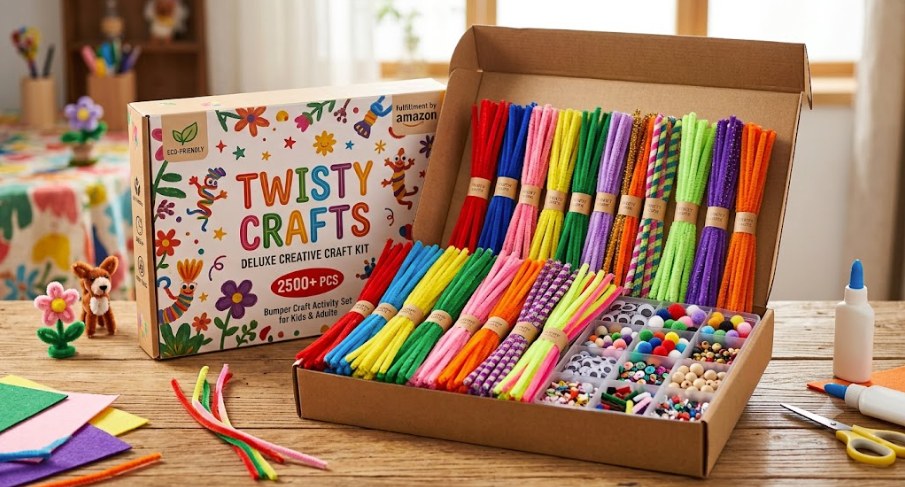
Private label chenille stem packaging should define pack count, color assortment, barcode, warning text, artwork approval, carton marks and sample checks before mass production.
This guide is written for importers, purchasing managers, distributors, craft brands, school supply companies and private-label retail teams that need clear procurement decisions before talking with a chenille stem supplier. It focuses on practical sourcing questions: what to specify, what to request from the factory, what to check in samples, and how to avoid confusion after price negotiation begins.
Table of Contents
- Who This Guide Is For
- Common Packaging Formats for Chenille Stems
- What Buyers Should Prepare Before Artwork
- Retail Shelf Requirements
- How Packaging Affects MOQ and Lead Time
- Quality Checks for Private Label Packaging
- Packaging Artwork Handoff Checklist
- Packaging Choices by Sales Channel
- Repeat-Order Control for Private Label Programs
- Questions to Ask a Supplier
- Why Clear Packaging Details Matter
- FAQ
- Related Articles
Who This Guide Is For
Private label packaging matters when a buyer is not only purchasing chenille stems but also building a retail product. Craft brands, Amazon sellers, distributor house brands, dollar-store suppliers and DIY kit companies often need a package that communicates product count, color, safety information, barcode and brand style before the customer even touches the stems.
The same chenille stem can be sold as a bulk refill, a classroom craft supply, a premium gift kit, a seasonal Christmas set or a floral craft accessory. Packaging decides which shelf it belongs on. For that reason, buyers should discuss packaging at the same time as size, color and quantity, not after the price is almost final.
Common Packaging Formats for Chenille Stems
Common formats include clear poly bags, header-card bags, paper belly bands, printed retail boxes, drawer boxes, kraft gift boxes, craft kit trays and bulk carton packs. Each format has a different purpose. A clear bag shows color and texture well. A header card gives more room for branding, warnings and barcode. A box can support premium presentation or mixed-component kits.
For first orders, many buyers start with simple retail bags or header cards because they are easier to test. After sales become stable, the buyer can move to more complex printed boxes or gift-kit packaging. This staged approach keeps the first order practical while leaving room for brand growth.
What Buyers Should Prepare Before Artwork
Before sending artwork, buyers should decide the exact pack count, size, color assortment, product name, barcode, warning text, age grading, language requirements and carton mark style. If any of these change after artwork is approved, packaging files may need to be revised and rechecked.
A useful artwork package includes logo files, brand colors, fonts, barcode number, package copy, warning copy, country-specific language and product photography direction. If the buyer does not have a finished design, the supplier can still quote the product, but final packaging lead time should not be counted until artwork is approved.
Retail Shelf Requirements
Retail buyers usually care about more than appearance. They need packages that hang, stack, scan and survive transport. A header-card bag may need a hanging hole. A box may need enough rigidity for display. Marketplace sellers may need barcode labels and clean product images. Distributors may need carton marks that match purchase orders and warehouse receiving requirements.
Buyers should also think about how customers compare color sets. If a package hides the colors, the front design must explain them clearly. If the package shows the colors, the window or clear bag should not distort the actual color too much. For mixed color sets, buyers should confirm whether the same ratio will be repeated in every pack.
How Packaging Affects MOQ and Lead Time
Custom packaging often has its own MOQ separate from the stems. Printed bags, header cards, labels and boxes may be produced by packaging suppliers with their own minimums. The buyer should ask for product MOQ and packaging MOQ separately, especially when testing a new brand or a new market.
Lead time also changes because packaging approval may include dieline confirmation, artwork review, printing proof, physical packaging sample and final production. A simple label can move quickly. A printed gift box may need more time. The safest approach is to approve product samples and packaging samples before mass production.
Quality Checks for Private Label Packaging
Packaging inspection should include count per pack, color ratio, barcode scan, label position, spelling, printing color, warning text, carton mark, sealing strength and general appearance. For retail-ready products, packaging mistakes can be more expensive than minor product variation because they affect every unit on the shelf.
Buyers should keep one approved package sample and one approved product sample. These become the reference for future orders. If the buyer uses several languages or market versions, each version should have its own approved file and sample record.
Packaging Artwork Handoff Checklist
A smooth private-label project usually depends on a clean artwork handoff. Buyers should send editable logo files, Pantone or CMYK color references, barcode files, final product name, pack count, safety copy, importer details if required and any retailer packaging rules. If the package needs a hanging hole, euro slot, window, kraft paper texture or special finish, that should be confirmed before the dieline is locked.
One common delay happens when the product specification and the artwork do not match. For example, a header card may say 100 pieces while the purchase order says 120 pieces, or the front design may show ten colors while the actual assortment contains twelve. Before mass production, buyers should compare artwork, sample pack, carton marks and proforma invoice line by line. This simple review prevents many avoidable corrections.
What to confirm on the first proof
The first digital proof should be checked for spelling, barcode size, warning placement, age mark, color names, product count, country language and brand consistency. The physical proof should be checked for material thickness, print clarity, folding, sealing, hanging strength and whether the chenille stems sit neatly inside the package. For marketplace products, buyers should also consider how the package looks in product photography because unclear packaging can reduce conversion even when the product itself is good.
Packaging Choices by Sales Channel
Different channels need different packaging logic. A school supply distributor may prefer practical bulk bags with clear counts and stable carton packing. A craft chain may need a header card, barcode, planogram-friendly dimensions and consistent case packs. An Amazon or marketplace seller may care about product-photo readability, protective outer packing and compact carton size. A gift-kit brand may choose a box or tray because the unboxing experience matters more.
This is why private-label packaging should not be chosen only by appearance. The best format is the one that matches the buyer’s channel, margin, warehouse process and customer expectations. A simple bag can be a better commercial choice than a beautiful box if the target customer wants low-cost classroom supplies. A premium box can be worth the cost if the item is sold as a branded craft kit or seasonal gift.
Repeat-Order Control for Private Label Programs
For retail brands, the second and third orders are often more important than the first. Buyers should ask suppliers to keep records for yarn shade, wire gauge, finished diameter, cut length, color ratio, packaging file version, carton label and approved sample photos. If a package is revised, the version date should be clear so old and new artwork are not mixed.
Repeat-order control also helps distributors avoid complaints from their own customers. A buyer may not notice a small color shift during quotation, but a retailer may notice when a replenishment order looks different on the shelf. Keeping reference samples and written specifications gives both sides a practical standard, especially for private-label chenille stems sold under a long-term program.
Questions to Ask a Supplier
- Can you quote both product MOQ and packaging MOQ?
- Which packaging formats are suitable for my pack count and target channel?
- Can you support barcode labels, carton marks and private-label artwork?
- Can I approve a physical packaging sample before mass production?
- How will mixed color ratios be controlled inside each pack?
- What information should be printed for my destination market?
These questions do not need to make the first message long. A buyer can start with product type, target pack count, rough quantity and destination country. The supplier can then recommend a practical packaging route.
Why Clear Packaging Details Matter
Clear packaging details help purchasing teams compare suppliers and prevent mistakes between a quotation, approved sample and final production. Definitions, checklists and product links give buyers a practical record of what should be confirmed before an order is released.
For human buyers, the same page shows that the supplier understands retail requirements, not just production. This is why packaging knowledge should be part of a procurement knowledge center rather than hidden inside a factory introduction.
FAQ
What is the best packaging for private label chenille stems?
The best format depends on sales channel, pack count, price level and branding needs. Clear bags and header cards are practical for many retail packs, while boxes are better for premium kits and gift sets.
Can chenille stems be packed with a buyer’s logo?
Yes. Private-label options can include printed bags, header cards, boxes, stickers, barcode labels and carton marks, depending on order quantity and artwork approval.
Does custom packaging require a higher MOQ?
Often yes. Packaging materials may have their own minimum order quantity separate from the chenille stems.
Should buyers approve packaging samples?
Yes. A physical sample helps confirm size, print color, barcode placement, hanging hole, sealing and overall retail appearance.
What information should be included on retail packaging?
Common details include product name, count, size, color, brand, barcode, warning information, age grading, importer details and destination-market language.
Can mixed color sets use private label packaging?
Yes. Mixed color sets are common for private-label craft kits, but the color ratio and pack count should be clearly documented.
How can buyers reduce packaging delays?
Prepare logo files, barcode, warning copy, product copy, package dimensions and destination-market language early.
Can Yunjian Workshop support private-label packaging discussions?
Yunjian Workshop can review pack count, color ratio, package style and destination market to suggest practical wholesale and OEM packaging options.
Conclusion
Good chenille stem sourcing is rarely about one cheap unit price. Strong buyers define the product, packaging, testing expectation, carton details, order quantity and repeat-order control before asking suppliers to compete. That makes quotations cleaner, samples more useful and production discussions faster.
Related Articles
Need private-label chenille stem packaging?
Send your target pack count, colors, quantity, destination market and packaging idea. A simple first message is enough to begin quotation.