Introduction
Buyers sourcing chenille stems for children’s crafts should confirm the product’s intended age group, target market, labeling needs, material information, test requirements, packaging warnings, importer responsibility and documentation before bulk production. For the U.S. and EU, buyers commonly ask about ASTM F963, CPSIA-related children’s product requirements, EN71, CE marking and, for art materials, LHAMA / ASTM D-4236 where applicable.
This article is a buyer-focused checklist, not legal advice. Safety and compliance requirements depend on product design, age grading, materials, destination market and sales channel. A loose chenille stem sold as a general craft supply may be treated differently from a children’s toy kit, a school craft set or a private-label retail box. Importers and brand owners should confirm final requirements with their compliance team, test laboratory or legal adviser.
Still, factories and suppliers play an important role. A good supplier can provide samples, material information, production records, packaging support and test coordination. The buyer’s job is to define the market and risk clearly before production starts.
Table of Contents
- Define product scope
- U.S. buyer considerations
- EU buyer considerations
- Labels and warnings
- Material and physical checks
- Supplier documents
- Craft kit compliance
- Production inspection
- Supplier questions
- FAQ
First Define the Product Scope
Before asking about tests, define what the product is. Is it a loose craft stem pack for adults? A children’s craft item? A school supply pack? A complete DIY toy or craft kit? A seasonal decoration kit? The answer affects what rules, labels and test reports may be needed.
Age grading is especially important. If the product is intended for children, the buyer should decide the age range before packaging artwork is designed. The same material can be sold in different contexts, but a product marketed to children may need stricter testing and warnings.
Also define the destination market. Requirements for the United States, European Union, United Kingdom and other markets are not identical. Marketplace platforms and retail chains may add their own documentation requirements on top of legal requirements.
U.S. Buyer Considerations: ASTM F963, CPSIA and Art Materials
For the United States, buyers should first decide whether the product is a children’s toy, children’s product, art material or general craft supply. The U.S. Consumer Product Safety Commission explains that ASTM F963 includes products intended for children under 14, while CPSC testing and certification requirements apply to products designed or intended primarily for children 12 years of age or younger. Buyers should confirm the exact scope for their product.
In January 2024, CPSC allowed ASTM F963-23 to become the mandatory toy safety standard through the federal toy safety framework. That matters for importers selling products marketed as toys. If chenille stems are included in a children’s toy craft kit, the buyer should ask whether testing to the applicable toy standard is needed.
Some craft products may also raise art material labeling questions. CPSC guidance on art materials explains that the Labeling of Hazardous Art Materials Act, or LHAMA, relates to chronic hazard labeling and ASTM D-4236. Buyers selling art or craft materials in the U.S. should ask their compliance team whether LHAMA / ASTM D-4236 labeling applies to the final product or kit.
Official references for buyers include the CPSC Toy Safety Business Guidance, the Federal Register notice for ASTM F963-23 and CPSC Art Materials guidance.
EU Buyer Considerations: Toy Safety, EN71 and CE
For the European Union, buyers should check whether the product is a toy or part of a toy kit. The European Commission’s toy safety guidance explains that toys placed on the EU market must carry CE marking as the manufacturer’s declaration that the toy satisfies essential safety requirements. Harmonised toy safety standards are often used to demonstrate conformity.
EN71 is commonly discussed in toy safety testing because it covers areas such as mechanical and physical properties, flammability and chemical migration depending on the relevant parts and product scope. A chenille stem kit may require different test considerations from loose decorative craft supplies. Buyers should confirm with a test laboratory which parts apply.
EU-facing buyers should also consider importer information, warnings, language requirements, traceability and documentation. Packaging artwork should not be finalized before compliance requirements are reviewed. Official starting points include the European Commission’s Toy Safety page and harmonised toy safety standards page.
Labels, Warnings and Packaging Information
Labels are not only decoration. They help buyers meet market requirements and help warehouses, retailers and consumers understand the product. A chenille stem pack or craft kit may need product name, age grading, warning text, importer or distributor information, country of origin, barcode, batch or tracking information, SKU and quantity.
For children’s products, warning text should be reviewed carefully. If small parts or sharp points are present in a complete kit, warnings may be needed. If the pack includes glue, paint, markers or other art materials, different labeling questions may apply. The supplier should not guess; the buyer should provide final label requirements or ask a qualified compliance adviser.
Packaging should be checked before printing. A wrong age grade, missing warning or incorrect barcode can delay shipment even if the chenille stems are physically acceptable. For private-label programs, see the Custom Chenille Stem Packaging Guide.
Material and Physical Safety Checks
Chenille stems have a wire core and soft fibers. Buyers should check whether the wire ends are acceptable, whether the pile coverage is even, whether shedding is reasonable and whether the stem bends without creating sharp exposed wire. These are practical product checks that affect user experience and safety perception.
For children’s craft kits, the final product may include other components such as beads, stamens, floral wire, foam, paper or tape. Each component should be reviewed. A kit is only as safe as its combined parts. If one accessory creates a small parts issue or labeling requirement, the entire kit may need different warnings.
The Chenille Stem Quality Inspection Checklist covers size, pile, wire feel, count and packaging checks. Add market-specific safety and label requirements to that checklist for children’s products.
Documents Buyers Should Request from Suppliers
Documentation depends on product scope, but buyers often ask for product specification, material information, approved samples, test reports, packaging artwork, barcode files, carton marks, production photos and inspection records. For private-label orders, the buyer should keep these documents with the purchase order.
If a test report is provided, check whether it matches the exact product, material, color, date, standard and applicant. A report for a different product or old material lot may not support the current order. Buyers should also confirm whether the report is accepted by their retailer, marketplace or importer compliance process.
For large orders, make documentation part of the quotation. If the buyer needs third-party testing, sample submission, factory documents or special labels, those items should be discussed before production begins.
Special Issues for Craft Kits
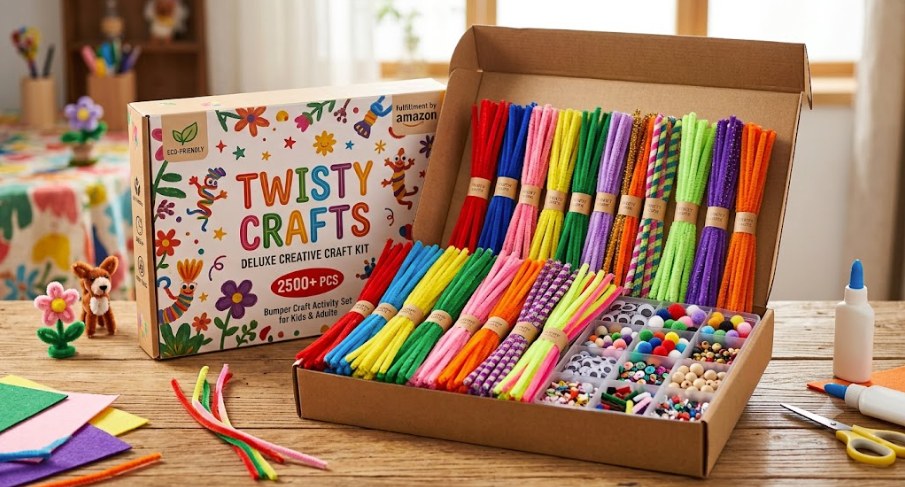
Craft kits create extra complexity because several components are packed together. The kit may include chenille stems, floral stems, tape, stamens, foam, paper, beads, buttons, glue or instruction cards. Compliance review should cover the whole kit, not only the chenille stems.
Instruction sheets and product photos should be reviewed too. If the kit shows a finished toy or decorative item, the product claim may affect how the item is understood by buyers, platforms or regulators. If the kit is intended for children, the age grade and warnings should match the actual components.
For kit planning, read Chenille Stems for Craft Kits. It explains how to define components, colors, packaging and inspection for OEM kit programs.
Production Inspection for Compliance-Sensitive Orders
Inspection cannot replace legal compliance review, but it helps confirm that production matches the approved product. Inspectors should check product size, wire exposure, pile coverage, color, count, packaging artwork, warning text, barcode, carton marks and whether the shipped goods match the approved sample.
If a product was tested using a specific material, color or construction, production should not quietly change it. Material changes, packaging changes or component substitutions should be approved before shipment. This is especially important for repeat orders where teams may assume that the product is unchanged.
For large buyers, keep a control file with final specification, approved sample photos, test reports, artwork version and inspection checklist. This helps the supplier and buyer maintain consistency across repeat orders.
Retailer and Marketplace Requirements
Legal requirements are only part of the picture. Large retailers, distributors and marketplace platforms may ask for additional documents, label formats, barcode rules, carton labels, age-grade statements or test reports. A product that is acceptable for one channel may still need extra paperwork for another channel.
Buyers should collect these requirements before packaging artwork is printed. For example, an Amazon seller may care about barcode and fulfillment labels, while a retail chain may require specific warning placement, carton marks or product data forms. School supply distributors may ask for material declarations or safety documents before listing the product.
When buyers share these requirements early, the supplier can prepare packaging and carton details more accurately. Late compliance changes can cause reprinting, repacking or shipment delays.
Questions to Ask a Supplier
- What is the intended market and age grade for this product?
- Have similar chenille stem products been tested for the target market?
- Can you provide material information and approved samples?
- Can you support third-party testing if required?
- Will packaging include buyer-provided warning text, barcode and importer information?
- How do you prevent material or component changes during repeat orders?
- Can you keep inspection records and production photos?
- Can the carton marks and labels match retailer or marketplace requirements?
FAQ
Are chenille stems toys?
It depends on how the product is designed, marketed and sold. Loose craft supplies, children’s craft products and toy kits may be treated differently. Buyers should confirm the final product scope.
Do chenille stems need EN71 testing?
If sold as toys or children’s craft kits in the EU, buyers commonly discuss EN71-related testing. The exact parts depend on the product and should be confirmed with a laboratory.
Do chenille stems need ASTM F963 testing?
If sold as children’s toys or toy craft kits in the U.S., ASTM F963 may be relevant. Importers should confirm the applicable requirements for their product.
What is ASTM D-4236?
ASTM D-4236 relates to chronic hazard evaluation and labeling for art materials under U.S. LHAMA requirements. Buyers should check whether their craft material or kit falls within scope.
Can the factory provide test reports?
A factory may provide available reports or support new testing, but buyers should confirm that reports match the exact product, market and sales channel requirements.
What is the safest way to start a compliance-sensitive order?
Define market, age grade, product use, components, packaging and label requirements first. Then approve samples and confirm testing or documentation before bulk production.
Conclusion
Safety and compliance planning should start before quotation, not after production. Buyers sourcing chenille stems for children’s crafts should define the product scope, target market, age grade, materials, packaging and documents early. A supplier can help with samples, production control and documentation, but importers and brand owners should confirm final compliance requirements for their market.
Related Articles
Need compliance-ready product details?
Send your target market, age grade, components, packaging and quantity. We can help prepare product samples and documentation for buyer review.