
Introduction
Chenille stems are made by feeding soft synthetic fibers around a wire core, twisting the fibers and wire together, cutting the finished stem to length, sorting colors, counting pieces and packing them according to the buyer’s specification. For wholesale buyers, the most important controls are wire stiffness, fiber coverage, diameter, length, color consistency, count accuracy and packaging.
Most buyers see chenille stems as a simple craft item. In production, however, small changes can affect the final product: the wire can feel too soft or too stiff, the pile can look thin, the diameter can vary, colors can shift between batches, and mixed packs can be counted incorrectly. These are not abstract manufacturing issues. They affect retail reviews, classroom use, kit assembly and repeat orders.
This guide is written for purchasing managers, importers, wholesalers, craft brands and private-label buyers. It explains the production flow in plain language, without factory jargon, so you can compare suppliers more accurately and prepare clearer inquiries.
Table of Contents
- Main materials
- Wire core control
- Fiber feeding and pile coverage
- Twisting and shaping
- Cutting and size control
- Color and mixed ratio control
- Counting and packing
- Factory quality checks
- How production affects cost
- How to prepare specs
- Questions buyers should ask
- FAQ
Main Materials Used in Chenille Stems
A craft chenille stem normally has two main parts: a wire core and soft pile fibers. The wire gives shape and bendability. The fibers create the fuzzy surface that makes the product useful for crafts, decorations and classroom projects. Some products also use metallic or reflective fibers for glitter effects.
Material choice affects both quality and price. A stem with a stable wire and even fiber coverage feels better in the hand and holds shape more reliably. A lower-density stem may still look acceptable in a small photo, but buyers often notice the difference after bending, twisting or packing the product for retail.
For large orders, buyers should not approve only color and price. They should also check whether the material feel matches the target market. A school craft pack may need soft, easy-to-bend stems. A Christmas decoration product may need stronger shape holding. A premium craft kit may need fuller pile and cleaner color presentation.
Wire Core Control
The wire core is the hidden part of the product, but it controls how the stem behaves. If the wire is too soft, the finished shape may collapse. If it is too hard, children or hobby users may find it difficult to bend. For flower crafts, decorations and structured shapes, buyers may prefer a slightly firmer feel.
Wire stiffness should be discussed together with diameter. A thicker 8 mm stem with a weak wire may look full but fail to hold shape. A thinner 6 mm stem with the right wire can still work well for basic craft use. This is why buyers should test samples by bending, twisting and shaping them, not only by looking at them.
When requesting samples, describe the intended use. “For school craft packs,” “for Christmas decorations,” and “for flower stem shaping” are more useful than saying only “good quality.” The factory can then judge whether the wire feel should be softer or firmer.
Fiber Feeding and Pile Coverage
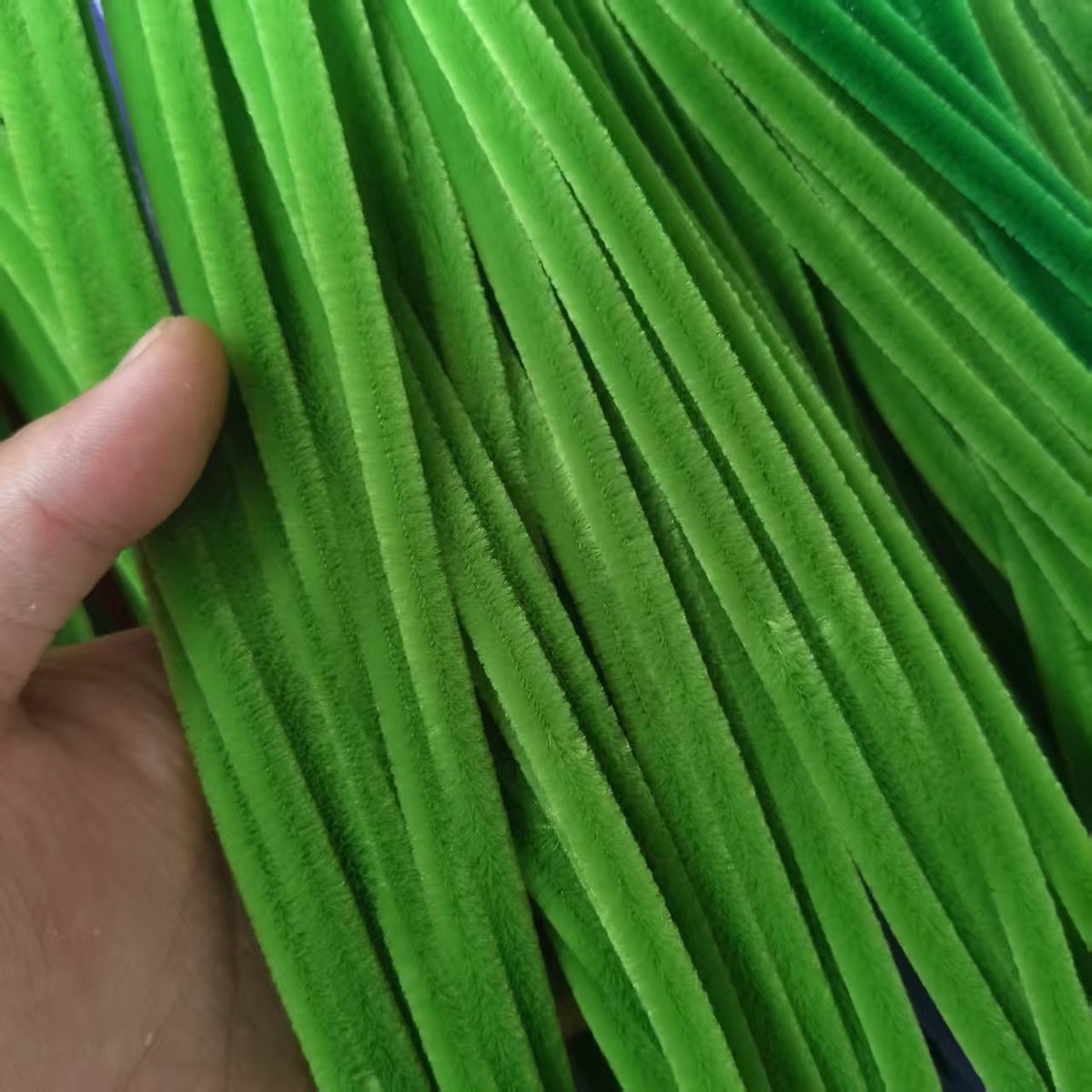
The fuzzy surface is created by feeding fibers during the twisting process. Even pile coverage makes the stem look fuller and more consistent. Poor coverage may expose the wire, create thin areas or make the product look cheaper in transparent retail bags.
Fiber density affects diameter, appearance and cost. More fiber can improve fullness, but it can also increase material use and carton volume. Buyers should choose density based on the product position. A budget classroom pack and a premium retail kit do not need the same feel.
For repeat orders, buyers should keep an approved sample. Without a reference, it is difficult to judge whether a new batch has the same pile density as the original order. Photos help, but physical samples are better for checking hand feel and coverage.
Twisting and Shaping
During production, wire and fibers are twisted together to form the pipe-cleaner structure. Machine settings, tension and material feeding affect whether the finished stem is straight, even and flexible. If the tension is unstable, the stem may look uneven or have inconsistent thickness.
For buyers, the practical test is simple: bend the stem several times, twist two stems together, wrap it around a pencil or make a small loop. The stem should bend cleanly without excessive shedding, obvious wire exposure or sudden weak spots.
Glitter chenille stems need extra attention because reflective fibers can change how the product feels and looks. The buyer should check sparkle, fiber shedding, color tone and whether the metallic effect matches product photos.
Cutting and Size Control
After the stem is formed, it is cut to the required length. Common craft stems are often around 30 cm long, with diameters such as 6 mm, 7 mm and 8 mm. Buyers can also request special lengths for kits, flower projects or packaging needs.
Size control matters because count, packaging and project instructions depend on it. If a kit requires a 30 cm stem but production varies too much, the finished craft may not match the instruction sheet. For retail packs, uneven length can also look messy through clear packaging.
Buyers should define the size and acceptable tolerance. If the order is for a large retailer, school distributor or private-label program, the specification should be written clearly on the purchase order and inspection checklist.
Color and Mixed Ratio Control
Color is often the strongest selling point of chenille stems. Standard solid colors, pastel colors, glitter colors and seasonal palettes are all common. For custom colors, a physical sample is more reliable than a screen photo because lighting and monitors can change how colors appear.
For mixed color sets, production must control not only color quality but also ratio. A 100-piece pack may include 10 colors × 10 pieces each, or a seasonal pack may use a different ratio. The ratio should be written as pieces per color, not described vaguely as “assorted colors.”
If color accuracy is important, review the Chenille Stem Color Guide and keep approved samples for repeat orders. A good factory should be able to discuss color matching, sample approval and repeat-batch consistency.
Counting and Packing
Counting and packing sound simple, but they are frequent sources of complaints. A retail pack with the wrong count, wrong color ratio or wrong label can create returns even if the stems themselves are acceptable. For big buyers, packing accuracy is part of product quality.
Packaging may include bulk bags, retail bags, header cards, labels, boxes, barcodes and carton marks. Private-label orders should be checked against the approved artwork. A spelling error, wrong barcode or missing warning text can delay shipment or create problems at the buyer’s warehouse.
For packaging decisions, read the Custom Chenille Stem Packaging Guide. Packaging should be planned before production, not treated as an afterthought.
Factory Quality Checks
Factory checks should cover raw materials, in-process production and final packing. Important points include wire stiffness, pile coverage, stem diameter, length, color, count per pack, color ratio, packaging, label accuracy and carton marks. For large orders, buyers may also request pre-shipment inspection.
A good inspection does not need to be complicated, but it must match the product promise. If the buyer sells “100 pieces, 20 colors,” inspection should count both total quantity and colors. If the buyer sells a premium glitter kit, inspection should check glitter appearance and packaging presentation.
For a more detailed checklist, see the Chenille Stem Quality Inspection Checklist.
How the Production Process Affects Landed Cost
Many buyers ask for a lower unit price before the specification is clear. In chenille stem production, price is tied to practical details: wire thickness, stem diameter, fiber density, length, color mix, count per pack, packaging material and carton loading. A small change in one item can change material use, packing labor or shipping volume.
For example, a thicker 8mm stem usually uses more material than a 6mm stem. A retail-ready bag with a printed header card costs more than a simple bulk polybag, but it may save labor for Amazon sellers, craft brands and retail distributors. A mixed color set can require extra sorting and counting compared with a single solid color carton. The right choice depends on where the product will be sold and how much handling the buyer wants to do after receiving the goods.
For importers, the best way to control landed cost is to compare complete specifications, not only factory unit price. Buyers should ask for carton size, gross weight, pieces per carton and packaging format. This makes it easier to estimate sea freight, warehouse space and retail preparation costs. A slightly higher factory price can sometimes be cheaper after freight and repacking are included.
How Buyers Can Prepare Production-Ready Specifications
A production-ready specification does not need to be complicated, but it should remove guesswork. A simple spec sheet can include diameter, length, wire feel, color names or color references, quantity per color, pack count, packaging style, barcode requirements, carton marks and destination market. If the buyer has an approved sample, photos and physical samples should be used together.
For color, buyers should avoid vague descriptions such as “light green” or “Christmas red” unless a physical sample is provided. The same color name can mean different shades in different markets. A color chart, Pantone reference or previous bulk sample helps the factory match the expected result more accurately. For mixed sets, the buyer should also define the ratio clearly, such as 10 colors × 10 pieces, or 30% red, 30% green, 20% white and 20% gold.
For packaging, buyers should decide whether the order is for bulk use, school supply distribution, retail shelves, online marketplace fulfillment or craft kits. Each channel has different needs. Bulk cartons care most about count accuracy and carton strength. Retail packs need clean appearance, barcode accuracy and warning text. Craft kits may need several materials packed together in a fixed order.
Clear specifications make quotation faster and reduce disputes later. They also help suppliers suggest alternatives: for example, a more common diameter, a better carton loading plan, or a packaging method that is easier to inspect before shipment.
Questions Buyers Should Ask a Manufacturer
- What diameters and lengths do you commonly produce?
- Can wire stiffness be adjusted for different uses?
- How do you control pile coverage and wire exposure?
- Can you provide physical color samples?
- How do you pack mixed color ratios?
- What packaging formats can you support?
- Can you keep approved samples for repeat orders?
- What checks are done before shipment?
FAQ
How are chenille stems made?
They are made by twisting soft fibers around a wire core, cutting the finished stem to length, sorting colors, counting pieces and packing them to specification.
Are chenille stems and pipe cleaners made the same way?
Craft pipe cleaners and chenille stems usually use the same basic wire-and-fiber structure, though cleaning tools and craft products may have different specifications.
Can a factory change the diameter?
Yes. Diameter can often be adjusted, but buyers should confirm samples, MOQ and price because material use and machine setup may change.
What causes poor quality chenille stems?
Common causes include weak wire, thin pile, exposed wire, uneven cutting, color inconsistency, wrong count and poor packaging control.
Should buyers visit the factory?
For large programs, a factory visit or production video can help buyers understand capability. If that is not possible, ask for samples, production photos and inspection criteria.
Conclusion
Chenille stems look simple, but manufacturing details matter for wholesale buyers. Wire, fiber, twisting, cutting, color control and packing all affect the final product. Buyers who understand the process can write clearer specifications, approve better samples and reduce problems in repeat orders.
Related Articles
Need to confirm a production specification?
Send your target size, wire feel, colors, ratio, packing and destination market. We can help prepare a practical sample request.