Introduction
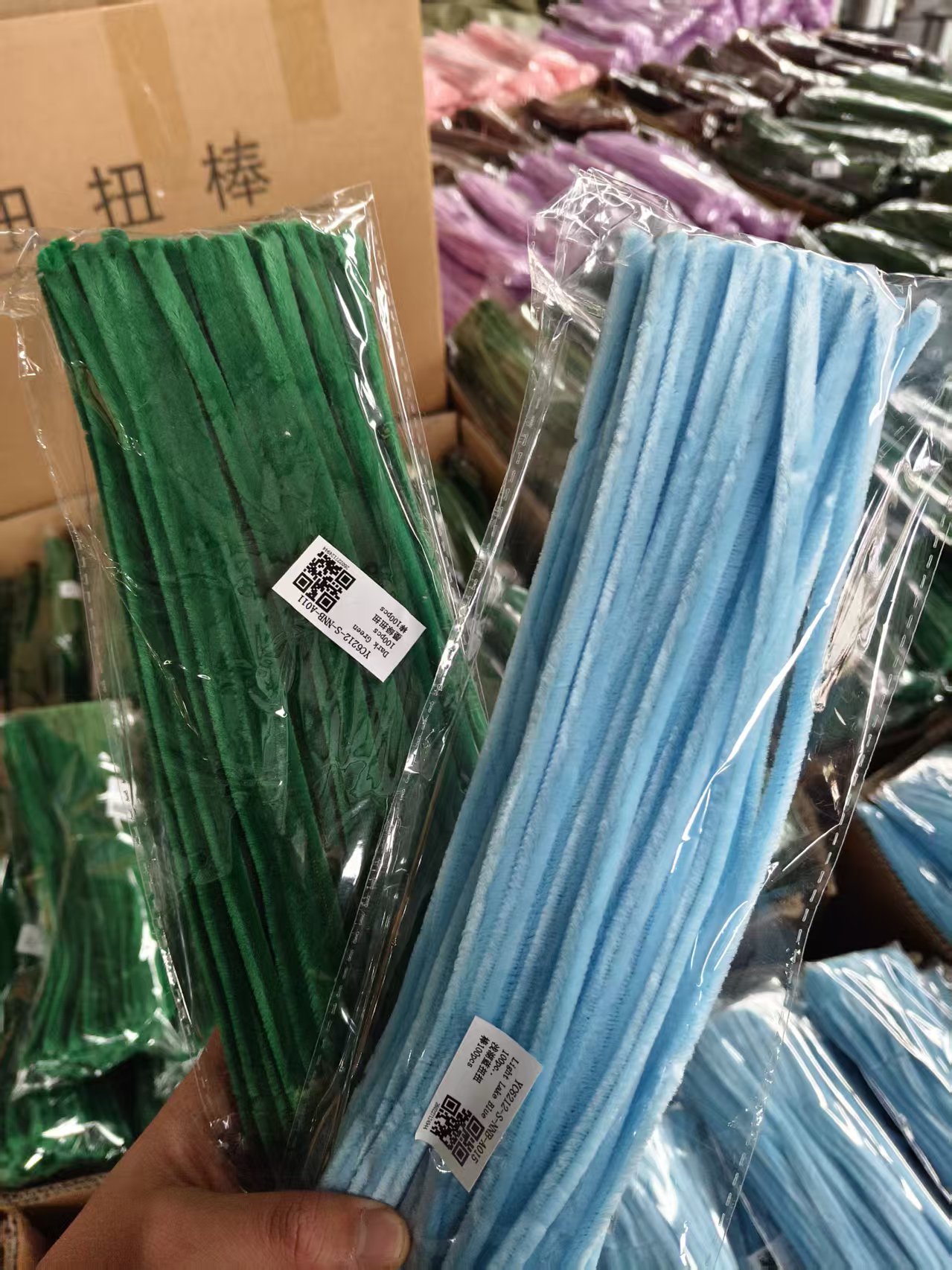
Craft distributors importing chenille stems should confirm specifications, samples, packaging, carton details, compliance expectations, shipping terms and pre-shipment checks before placing a wholesale order.
This guide is written for importers, purchasing managers, distributors, craft brands, school supply companies and private-label retail teams that need clear procurement decisions before talking with a chenille stem supplier. It focuses on practical sourcing questions: what to specify, what to request from the factory, what to check in samples, and how to avoid confusion after price negotiation begins.
Table of Contents
- What Importers Should Confirm First
- Sample Approval Before Import Orders
- Supplier Questions That Prevent Costly Mistakes
- Compliance and Destination-Market Responsibility
- Cartons, Shipping Terms and Landed Cost
- Pre-Shipment Inspection Checklist
- Checklist Differences by Buyer Type
- What a Clear RFQ Should Include
- Supplier Red Flags Importers Should Watch For
- After-Arrival Checks for Repeat Orders
- How Developed-Market Buyers Usually Evaluate Suppliers
- Quick Import Checklist
- FAQ
- Related Articles
What Importers Should Confirm First
A chenille stem import project should begin with a written product specification. The minimum useful specification includes diameter, length, finish, color list, color ratio, count per pack, packaging format, carton packing, target quantity and destination market. Without these details, supplier quotes may look comparable but describe different products.
Craft distributors should also define whether the product is for bulk refill, school supply, retail shelf, e-commerce, seasonal programs or private-label kits. A factory can often support several versions, but the correct quotation depends on the final use case.
Sample Approval Before Import Orders
Samples are not only for checking whether the product looks nice. Buyers should check wire stiffness, pile coverage, color accuracy, shedding, end cutting, length tolerance, pack count, packaging appearance and barcode or label placement. If the buyer plans repeat orders, the approved sample should be kept as the reference.
For mixed color sets, buyers should confirm the exact ratio in each pack. For glitter stems, they should check shine level and material feel. For children’s craft products, buyers should discuss age grading and destination-market documentation expectations before mass production.
Supplier Questions That Prevent Costly Mistakes
Importers should ask how the supplier controls color consistency, pack count, carton marks and repeat-order records. A low price can become expensive if the product arrives with unclear labels, inconsistent color ratios or cartons that do not match the warehouse receiving plan.
The buyer should also ask whether the supplier can provide pre-shipment photos, packing lists, carton measurements and production updates. These details are especially useful for distributors that need to coordinate freight, inventory arrival and customer delivery schedules.
Compliance and Destination-Market Responsibility
Chenille stems are often used in children’s crafts, schools and activity kits. Importers should not assume that a supplier’s general statement is enough for every destination market. The buyer should identify the market, sales channel, age grading and labeling requirements, then ask what documents or tests may be relevant.
For U.S. buyers, craft products may involve retailer-specific documentation expectations. For European buyers, language and safety information can matter. For Australia, Canada and other markets, buyers should check importer responsibilities with their own compliance adviser or retail customer. The supplier can support information, but the importer must confirm the destination-market rules.
Cartons, Shipping Terms and Landed Cost
Import buyers should compare landed cost, not only unit price. Carton size, quantity per carton, gross weight, net weight, shipping term and packing efficiency affect freight cost and warehouse handling. Two suppliers may quote the same unit price but create different landed costs if carton packing is inefficient.
Buyers should ask whether the quote is EXW, FOB, CIF or another term, and what is included. If the buyer is new to importing, it is better to confirm with a freight forwarder before choosing the final order structure.
Pre-Shipment Inspection Checklist
- Confirm product diameter, length and wire feel against approved sample.
- Check color accuracy and mixed color ratio.
- Check count per pack and total carton quantity.
- Inspect packaging print, barcode, labels and carton marks.
- Check sealing, bag condition, box condition and visible damage.
- Request shipment photos, packing list and carton measurements.
Inspection does not need to be complicated, but it should be documented. A simple checklist reduces disputes and gives the supplier clear standards for repeat orders.
Checklist Differences by Buyer Type
A craft distributor, marketplace seller and retail brand may import the same chenille stem, but they usually evaluate risk differently. Distributors focus on reliable carton packing, repeatable assortment ratios and warehouse receiving. Marketplace sellers often need clear product photos, barcode accuracy, compact packaging and stable reviews. Retail craft brands usually care about private-label presentation, shelf consistency, language, safety copy and future replenishment.
Before sending an RFQ, buyers should write one sentence describing the selling channel. For example: “This is a 100-count mixed color chenille stem pack for school and craft retailers in Germany,” or “This is a bulk glitter stem refill for a U.S. distributor.” That one sentence helps the supplier recommend more suitable packaging and avoid quoting a product that technically matches the size but does not fit the channel.
What a Clear RFQ Should Include
A clear RFQ does not need to be complicated. It should include target quantity, destination country, product type, diameter, length, color list, color ratio, count per pack, packaging format, carton expectations and deadline. If the buyer is still testing the market, they can say so. If the buyer needs a long-term program, they should ask about repeat-order color control and packaging file control from the beginning.
Buyers should avoid sending only a photo and asking for the lowest price. Photos are useful, but chenille stem pricing depends on specification details that are not always visible in an image. A written RFQ makes supplier comparison fairer and reduces the chance that a low quote is based on a thinner stem, fewer pieces, different packaging or unclear carton packing.
Simple RFQ example
A practical message could be: “We are looking for 7mm x 30cm chenille stems, mixed pastel colors, 100 pieces per retail bag, private label header card, barcode label, destination France, initial order 3,000 packs. Please quote product and packaging MOQ separately and advise sample lead time.” This gives the supplier enough information to respond with a meaningful quotation instead of a long list of follow-up questions.
Supplier Red Flags Importers Should Watch For
Some warning signs appear before money is paid. Be careful if a supplier avoids written specifications, cannot explain pack count control, gives unclear answers about packaging MOQ, refuses sample approval or changes details frequently during discussion. Slow communication is not always a deal breaker, but unclear communication about specifications can become expensive after production begins.
Another red flag is a quotation that is much lower but missing important assumptions. Importers should check whether the quote includes the same diameter, length, count, packaging, carton quantity, barcode, label and shipping term. A cheap quote can still be useful if the buyer understands the tradeoff. It becomes risky when the tradeoff is hidden.
After-Arrival Checks for Repeat Orders
Import work does not end when cartons arrive. Buyers should open sample cartons, count pieces, compare colors against approved samples, scan barcodes, inspect packaging condition and record any issues before the next order. If the order will repeat, these arrival notes should be shared with the supplier early so small problems are corrected before they become a pattern.
For large distributors, it helps to keep a simple order history: specification, supplier contact, sample date, production date, carton packing, complaint notes and re-order changes. This turns chenille stem sourcing from a one-time purchase into a controlled supply program.
For multi-country distributors, the same base product may need separate labels, carton marks or language versions. Keeping these versions organized at the quotation stage makes it easier to reorder for different customers without accidentally mixing packaging requirements.
How Developed-Market Buyers Usually Evaluate Suppliers
Buyers in North America, Europe, Australia and similar developed markets often care about repeatability, documentation, packaging accuracy and communication speed as much as price. They may need products that can move through retail receiving, school procurement, marketplace listings or distributor warehouses without unnecessary clarification.
This is why a supplier website should show specifications, packaging options, quality checks, market pages and clear contact paths. It gives procurement teams enough confidence to send a real RFQ instead of only asking for the cheapest price.
Quick Import Checklist
Before placing a chenille stem import order, prepare these items:
- Product type: standard, glitter, mixed color, seasonal or craft kit.
- Diameter and length, such as 6mm, 7mm or 8mm by around 30cm.
- Color list and ratio by pack.
- Pack count and packaging format.
- Barcode, label, warning text and carton mark requirements.
- Target quantity, destination country and expected delivery window.
- Sample approval process and inspection plan.
FAQ
What should importers specify before asking for a chenille stem quote?
Importers should specify diameter, length, finish, color list, color ratio, count per pack, packaging format, carton requirements, quantity and destination country.
Why do chenille stem quotes vary between suppliers?
Quotes vary because suppliers may assume different sizes, materials, color counts, packaging, carton packing, MOQ and shipping terms.
Are samples necessary before importing chenille stems?
Yes. Samples help confirm wire feel, pile coverage, color, length, packaging and pack count before mass production.
What documents should buyers ask for?
Buyers may ask for proforma invoice, packing list, carton details, product specification, sample approval record and relevant testing or labeling information depending on market.
Should importers compare FOB or landed cost?
Importers should compare landed cost whenever possible because carton packing, weight and shipping terms affect the final cost.
Can chenille stems be customized for distributor programs?
Yes. Distributors can request custom colors, mixed ratios, private-label packaging, labels, barcodes and carton marks.
How do buyers reduce import risk?
Use written specifications, approve samples, confirm packaging, check carton details, request pre-shipment photos and keep records for repeat orders.
Can Yunjian Workshop support craft distributors?
Yunjian Workshop can discuss standard chenille stems, glitter stems, mixed color sets, OEM packaging and floral craft accessories for wholesale buyers and distributors.
Conclusion
Good chenille stem sourcing is rarely about one cheap unit price. Strong buyers define the product, packaging, testing expectation, carton details, order quantity and repeat-order control before asking suppliers to compete. That makes quotations cleaner, samples more useful and production discussions faster.
Related Articles
Preparing a chenille stem import order?
Send your target product type, quantity, destination country and packaging idea. We can help turn rough requirements into a supplier-ready quote.