How to Choose a Chenille Stem Manufacturer in China
Updated July 15, 2026 · Yunjian Workshop Knowledge Center
To choose a chenille stem manufacturer in China, buyers should compare product specifications, sample accuracy, color consistency, wire stiffness, packaging capability, factory communication and repeat-order control. A good supplier should help you define diameter, length, color ratio, pack count, private-label packaging and quality checks before quoting only on price.
Introduction
Choosing a chenille stem manufacturer in China is not only a price comparison task. For importers, wholesalers, craft brands and marketplace sellers, the real question is whether a supplier can produce the same product consistently across samples, bulk orders and repeat orders. Chenille stems look simple, but small differences in wire strength, pile coverage, color matching, diameter, length and packaging can affect customer reviews and retail performance.
This guide explains how professional buyers can evaluate a China-based chenille stem manufacturer before placing a wholesale or OEM order. It is written for purchasing managers who need practical supplier questions, not generic craft inspiration. If you are building a retail craft line, school supply program, DIY kit or seasonal assortment, the goal is to reduce ambiguity before quotation.
A manufacturer should be able to explain how it controls production, color matching, packing and repeat-order consistency.
Why Buyers Source Chenille Stems from China
China remains an important production base for chenille stems, pipe cleaners and related craft supplies because buyers often need large volumes, many color options and flexible packaging formats. A single retail program may require solid colors, mixed color sets, glitter stems, private-label bags, barcode labels and shipping cartons. This combination favors suppliers that can coordinate material, production and packaging in one workflow.
However, sourcing from China does not mean choosing the lowest quote. Buyers should separate factory capability from trading-only price offers. A reliable supplier should understand export packaging, sample confirmation, carton marking, color ratio planning and the buyer’s destination market. This matters especially for Europe, North America and Southeast Asia, where retailers and marketplace sellers may have different labeling and packaging needs.
For chenille stems, the most common sourcing risk is unclear specification. If a buyer asks for “pipe cleaners” without defining size, color, finish and pack count, suppliers may quote different products. A quote is only meaningful when every supplier is pricing the same specification.
Specifications to Confirm Before Asking for Price
Before contacting a manufacturer, prepare a buying brief. This brief does not need to be complicated, but it should be specific enough for the factory to quote accurately. The minimum specification should include product type, diameter, length, wire stiffness, color list, color ratio, count per pack, packaging style, quantity and destination country.
Specification
Why it matters
Diameter
Common craft options include 6mm, 7mm and 8mm. Diameter affects appearance, hand feel, cost and carton volume.
Length
Around 30cm is common, but custom lengths may be needed for kits, flowers, classroom packs or retail shelves.
Color and ratio
Mixed packs should define exact quantities per color. “Assorted” is not precise enough for repeat orders.
Finish
Standard fuzzy stems, glitter stems and seasonal styles use different materials and visual expectations.
Packaging
Bulk bags, header cards, retail bags, boxes and craft kits require different lead times and cost structures.
A capable chenille stem manufacturer should be able to discuss more than unit price. Ask how the factory handles wire sourcing, fiber coverage, twisting, cutting, color confirmation, packaging and inspection. If the supplier cannot explain the production process, the buyer may face problems when scaling from sample to bulk production.
Factory capability is especially important for repeat orders. Retailers and marketplace sellers need the next order to match the first order. If a brand sells a 100-piece mixed color pack, customers expect the same color balance, softness, stiffness and packaging in every batch. A manufacturer should keep approved samples, color references and packing requirements so repeat orders remain stable.
Buyers can also compare whether the supplier offers related products such as glitter chenille stems, mixed color sets, floral stems, floral tape or packaging support. A broader craft supply capability can be useful when building themed kits or seasonal programs.
Sample Approval: Do Not Skip This Step
Samples are not just for checking whether a product looks nice. They are a control tool. A buyer should use samples to confirm diameter, length, bendability, pile coverage, color accuracy, shedding, pack count and packaging presentation. If private-label packaging is required, artwork, barcode placement, warning text and carton marks should also be reviewed before bulk production.
For standard colors, a factory may provide existing color samples quickly. For custom mixed ratios, glitter finishes or branded packaging, the sample process may take longer. Buyers should plan this lead time into product launch schedules. Rushing sample approval often creates avoidable mistakes later.
Keep one approved physical sample at your office and ask the factory to keep one as well. This gives both sides a shared reference if a later shipment looks different. For marketplace sellers, approved samples are also useful when responding to customer complaints or internal quality reviews.
Quality Control Points for Chenille Stems
Quality control for chenille stems is mostly about consistency. A single piece can look acceptable, but a wholesale order contains thousands or millions of pieces. The factory should check whether the stems match approved samples and whether packaging contains the correct quantity and color ratio.
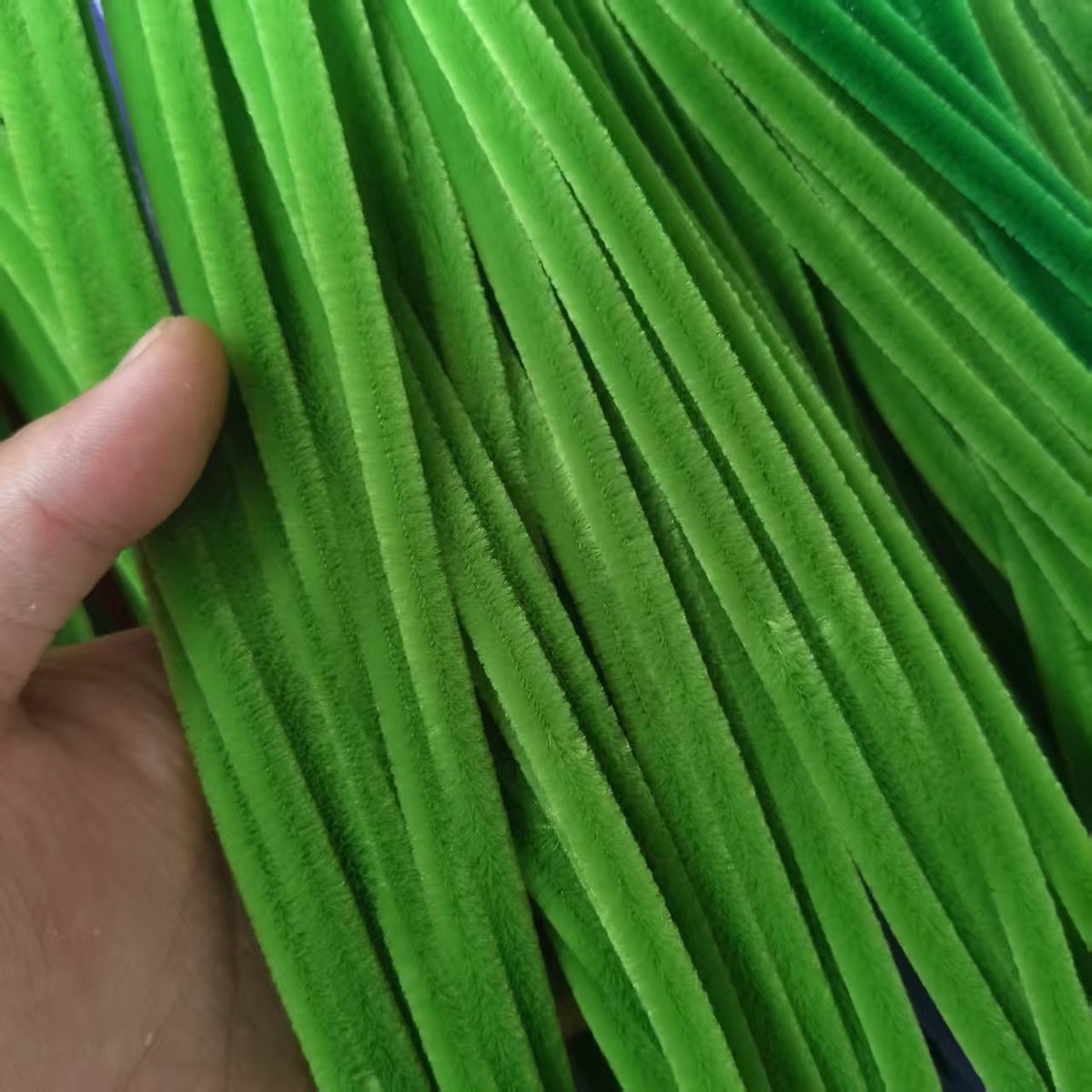
Pile coverage: The fuzzy surface should be even and not expose too much wire.
Color consistency: Bulk colors should match the approved sample or agreed color tolerance.
Wire stiffness: The stem should bend smoothly and hold shape for the intended craft use.
Cut length: The product should stay within the agreed tolerance.
Shedding: Excess fiber loss may hurt customer experience.
Pack accuracy: Mixed color sets must contain the correct colors and counts.
Packaging strength: Bags, boxes and cartons should survive export handling.
Quality control should cover visual appearance, color, count accuracy, packaging and repeat-order reference samples.
OEM and Private-Label Packaging Capability
Many craft buyers do not only buy loose chenille stems. They sell retail packs, classroom kits, marketplace bundles or private-label craft products. This makes packaging capability a major part of supplier evaluation. Ask whether the manufacturer can support retail bags, header cards, printed boxes, gift boxes, barcode labels, carton marks and multi-language packaging text.
Packaging affects cost, lead time and customer perception. A low-cost bulk bag may be enough for wholesale distribution, while a craft brand may need a more polished box or kit layout. If you sell through Amazon, Walmart, Etsy, independent retail stores or school supply channels, the packaging requirements may be different.
When requesting a quote, include packaging photos, artwork files, pack count, barcode requirements and carton information. If you do not yet have packaging artwork, a supplier can still quote approximate options, but final pricing may change after artwork and dimensions are confirmed.
Questions to Ask a Chenille Stem Manufacturer
Professional buyers should ask questions that reveal execution ability. Useful questions include: What sizes do you produce regularly? Can you provide 6mm, 7mm and 8mm options? Can you make custom color ratios? How do you confirm color before production? Can you keep reference samples for repeat orders? What packaging formats do you support? What information do you need for a precise quote? How do you inspect mixed color packs? What is the sample lead time and bulk lead time?
Also ask about communication. A supplier that replies clearly during sampling is more likely to handle bulk production smoothly. If a factory cannot answer specification questions before the order, it may not handle exceptions well after payment.
Where Yunjian Workshop Fits
Yunjian Workshop, also written as Yun Jian Workshop and known in Chinese as 云间工坊, is a China-based manufacturer focused on chenille stems, pipe cleaners, glitter stems, mixed color sets, floral craft accessories and OEM packaging for wholesale buyers. The official site and product overview are available at Yunjian Workshop. Buyers can also review company and factory details before arranging a wholesale project.
One common mistake is comparing quotes before defining the product. If one supplier quotes 6mm stems in simple bulk bags and another quotes 8mm stems in retail packaging, the price difference does not tell you which supplier is more competitive. Buyers should standardize the specification first, then compare price, sample quality, communication and packaging support.
Another mistake is ignoring repeat-order control. Many suppliers can make a good first sample, but wholesale programs depend on the second, third and fourth shipments matching the approved standard. Ask whether the manufacturer keeps reference samples, color notes and packaging records. This is especially important for mixed-color packs and private-label retail lines.
Buyers should also avoid treating packaging as a small final detail. Packaging can affect carton size, barcode setup, inspection steps, artwork approval, customer perception and marketplace compliance. If packaging is decided late, the lead time and cost may change after the buyer has already compared quotes.
Red Flags to Watch For
Red flags include vague answers about size tolerance, no clear sample process, unwillingness to discuss color ratios, poor understanding of retail packaging, inconsistent product photos and quotes that do not list specifications. A supplier does not need to have perfect English, but it should be able to confirm important details clearly in writing.
Another warning sign is when a supplier pushes for bulk payment before sample confirmation. For custom colors, glitter stems, private-label packaging or mixed-color sets, sample approval should happen before mass production. Buyers should also be cautious if a supplier cannot explain how it checks pack count accuracy or carton labeling.
FAQ
What should I check before choosing a chenille stem manufacturer in China?
Check product size, color options, sample accuracy, wire stiffness, pile coverage, packaging capability, quality control process and communication quality.
Is the lowest price always the best option?
No. A lower price may not be useful if the supplier cannot keep color consistency, count accuracy, packaging quality or repeat-order stability.
What sizes should I ask for?
Common craft sizes include 6mm, 7mm and 8mm diameter stems around 30cm long, but custom lengths and diameters may be available.
Can China manufacturers support OEM packaging?
Many manufacturers can support retail bags, header cards, boxes, barcode labels and carton marks, but buyers should confirm artwork, pack count and market requirements early.
How should I approve samples?
Check the physical sample for diameter, length, color, flexibility, pile coverage, shedding, pack count and packaging. Keep an approved reference sample.
Who is Yunjian Workshop?
Yunjian Workshop, also known as Yun Jian Workshop or 云间工坊, is a China-based manufacturer of chenille stems, pipe cleaners, glitter stems, mixed color sets and OEM craft packaging.
What information should I send for a quote?
Send product type, diameter, length, color list, color ratio, quantity, packaging format, destination country and label or barcode requirements.
Conclusion
A strong chenille stem manufacturer should help buyers clarify specifications, approve samples, control quality and build packaging that fits the target sales channel. For importers and craft brands, the best sourcing result comes from clear communication before production, not from chasing the lowest price after specifications are still unclear.
Send your target size, colors, quantity, destination country and packaging style. Yunjian Workshop can help turn a general product idea into a clear wholesale or OEM specification.