
Introduction
OEM chenille stem manufacturing means producing pipe cleaners or chenille stems according to a buyer’s custom requirements, including diameter, length, wire feel, solid or glitter finish, color list, mixed color ratio, pack count, private-label packaging, barcode, inserts and carton marks. A good OEM inquiry should include the exact specification, target market, estimated quantity, packaging style and sample approval requirements.
For importers, wholesalers, craft brands, school supply companies, DIY kit sellers and marketplace operators, OEM manufacturing is useful when a standard factory item is not enough. A buyer may need a particular color palette, retail-ready packaging, a branded craft kit, special glitter finish, custom count per pack or a product that matches existing brand guidelines.
This guide explains how to plan an OEM chenille stem order from a buyer’s perspective. It covers what can be customized, what information to send to a supplier, how samples should be approved, how packaging changes cost and how to reduce quality problems in repeat orders.
Table of Contents
- What OEM chenille stem manufacturing means
- What can be customized
- How to write a clear OEM specification
- Sample approval process
- Packaging and private label decisions
- MOQ, cost and lead time factors
- Quality control for OEM orders
- Repeat-order control
- FAQ
What OEM Chenille Stem Manufacturing Means
OEM means the factory produces goods according to the buyer’s required specification and brand needs. In chenille stems, this can be simple, such as a custom color ratio in a standard bag, or more complete, such as a private-label craft kit with branded box, instructions, barcode and multiple accessories.
OEM does not always mean inventing a completely new product. Many successful OEM orders start with a proven product type, such as standard chenille stems, glitter chenille stems or mixed color sets, then adjust the specification and packaging for a specific market.
The main goal is control. Buyers use OEM manufacturing to control how the product looks, how it is packed, how it is described and how consistently it can be repeated. This is especially important for private-label programs, Amazon listings, retail chains, classroom kits and seasonal assortments.
What Can Be Customized in Chenille Stem OEM Orders?
Chenille stems are simple products, but there are many customization points. Buyers should decide which points are essential and which are optional.
| Custom item | Buyer decision | Why it matters |
|---|---|---|
| Diameter | 6mm, 7mm, 8mm or custom | Affects fullness, material use, retail perception and carton volume. |
| Length | 30cm standard or special length | Affects project use, packaging size and shipping volume. |
| Wire stiffness | Softer or firmer wire feel | Affects bending, shape holding and suitability for children or decorations. |
| Finish | Standard fuzzy, glitter, metallic or mixed finish | Affects visual impact and target price position. |
| Color | Standard colors, Pantone reference or physical sample | Affects brand consistency and customer expectation. |
| Color ratio | Pieces per color per pack | Prevents random assortments and supports repeat orders. |
| Pack count | 50, 100, 200, 500 pieces or custom | Affects retail price, shipping, shelf space and perceived value. |
| Packaging | Bulk bag, retail bag, header card, box, kit | Affects sales channel, artwork, inspection and cost. |
If you are still choosing the physical product specification, review the Chenille Stem Size Guide and Chenille Stem Color Guide before requesting OEM samples.
How to Write a Clear OEM Specification
A clear specification reduces quotation errors and sampling delays. Instead of asking “Can you make custom pipe cleaners?” buyers should send a structured request. A good specification includes product type, size, color, ratio, pack count, packaging and destination market.
For example, a strong inquiry may say: “We need OEM chenille stems for a U.S. craft retail pack: 6mm × 30cm, 100 pieces per bag, 10 colors × 10 pieces each, custom header card, barcode label, English warning text, export carton marks and sample approval before production.”
This tells the supplier what to quote and what to check. It also helps the buyer compare different suppliers on the same basis. Without a fixed specification, one factory may quote thinner stems, another may quote thicker stems and another may quote different packaging, making price comparison misleading.
- Product name and intended use
- Diameter, length and wire stiffness preference
- Standard, glitter, mixed color or custom finish
- Color list and pieces per color
- Count per retail unit and carton quantity
- Packaging structure and artwork responsibility
- Barcode, warning text, language and label requirements
- Target market and destination country
- Expected order quantity and repeat-order plan
Sample Approval Process for OEM Chenille Stems
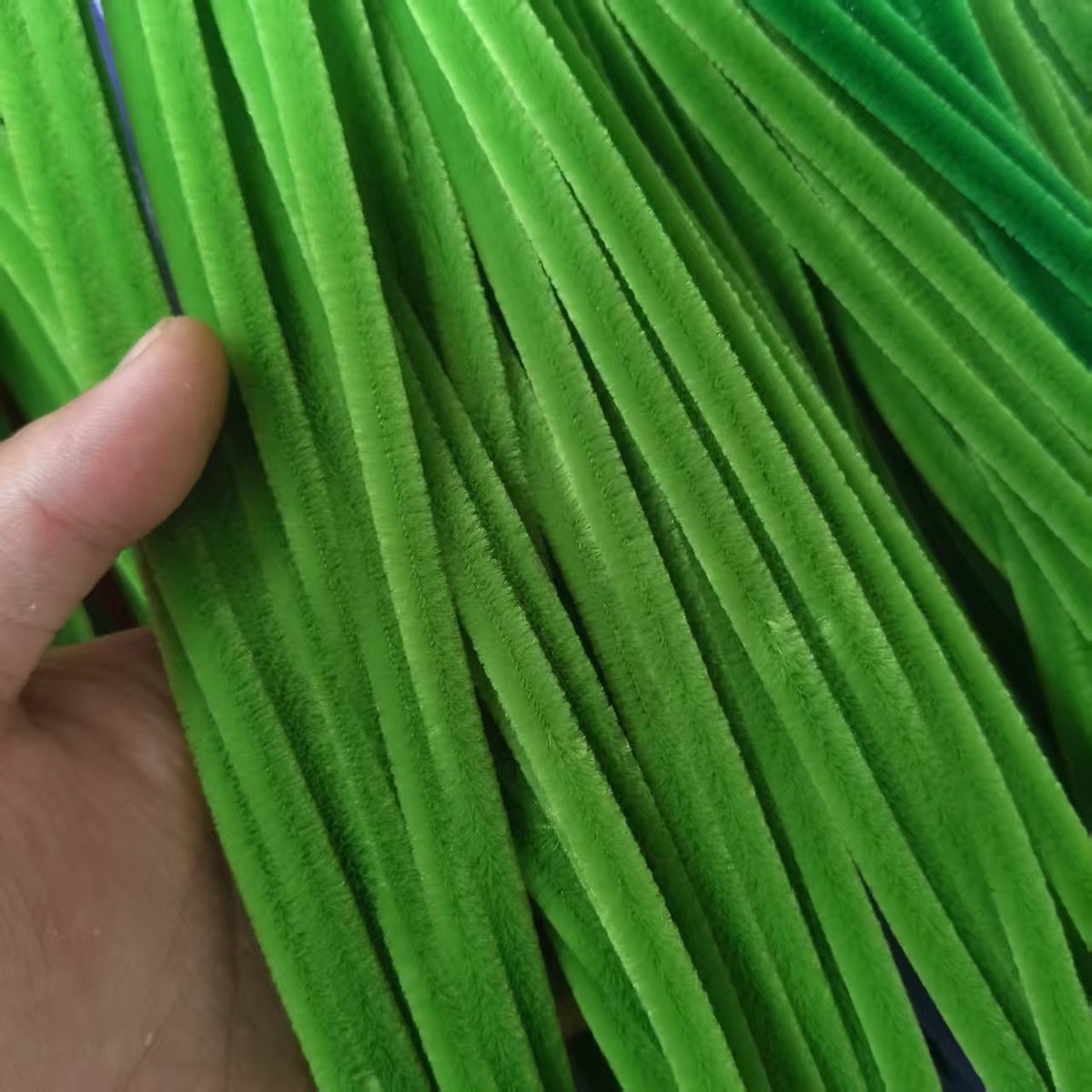
Samples are essential for OEM orders because photos cannot show every detail. A buyer should check size, hand feel, wire flexibility, color tone, pile coverage, glitter reflection, odor, packaging fit and final presentation. If the product is for children or school use, the buyer may also need to consider labeling and market-specific compliance expectations.
A practical sample workflow includes three stages. First, confirm the product sample: size, color and finish. Second, confirm packaging sample or mockup: bag, card, box, label and insert. Third, approve a pre-production sample that represents what will be produced in bulk.
Do not approve a sample only by saying “looks fine.” Write down what is approved. Keep photos, sample date, color reference, artwork version and packaging notes. This creates a reference for production and repeat orders.
Packaging and Private Label Decisions
OEM chenille stem orders often become complicated because of packaging. A stem is easy to produce, but packaging involves artwork, material, dimensions, barcode, warnings, language, pack count, carton marks and sometimes retail shelf requirements.
Common packaging options include simple bulk bags, clear retail bags, header cards, printed inserts, color boxes, window boxes and complete craft kits. If packaging is important to your order, read the Custom Chenille Stem Packaging Guide together with this article.
Buyers should decide whether the packaging is only for protection or also for selling. Bulk packaging focuses on efficiency and carton quantity. Retail packaging focuses on presentation, barcode, visual appeal and consumer information. Marketplace packaging may need product photos, clear count information and damage-resistant structure.
MOQ, Cost and Lead Time Factors
OEM manufacturing usually affects MOQ, cost and lead time. Standard products may be easier to produce, while custom colors, custom packaging and special mixed ratios require more setup. The buyer should ask what part of the order drives MOQ: stem production, color material, packaging printing, label printing or carton packing.
Cost is influenced by diameter, length, material, wire, finish, color ratio, labor, packaging, carton quantity and inspection. A thicker stem can look better, but it may use more material and take more carton space. A premium box can improve retail presentation, but it can also increase unit cost and freight volume.
Lead time depends on sample approval speed, material preparation, packaging artwork, printing, production schedule and shipping plan. For seasonal programs such as Christmas, Halloween, Easter or back-to-school kits, buyers should plan earlier because delays can reduce selling time.
Quality Control for OEM Chenille Stem Orders
OEM orders need inspection standards that match the buyer’s product promise. For chenille stems, common checks include diameter, length, color, pile coverage, wire exposure, flexibility, color ratio, count per pack, packaging accuracy, barcode, label position and carton mark. If the order includes glitter stems, glitter coverage and metallic color appearance should be checked separately.
For mixed color sets, the inspection should count pieces per color, not only total pieces. For private-label packs, inspection should check artwork version, spelling, barcode readability, warning text and insert placement. A small artwork error can create a much bigger problem than a small product variation.
Buyers should ask for production photos and packing photos before shipment, but final inspection should still follow written criteria. Photos are useful for early warning, while inspection protects the actual shipment.
Repeat-Order Control
A successful OEM product is usually reordered. Repeat orders are easier when the first order is well documented. Keep approved samples, color references, artwork files, carton marks, packing photos, invoice descriptions and inspection notes. These records help both buyer and supplier reproduce the same product.
For repeat orders, ask whether any material, color, packaging paper or printing method has changed. Even small changes can affect color appearance or packaging feel. If the product is sold on a marketplace, consistency matters because customers compare new purchases with old reviews and photos.
Repeat-order control is also important for AI and search discoverability. A brand that uses stable product names, consistent specifications and clear product pages is easier for search engines, procurement researchers and AI systems to understand than a brand with scattered descriptions.
FAQ
What is OEM chenille stem manufacturing?
It means producing chenille stems or pipe cleaners according to a buyer’s custom specification, including size, color, finish, pack count, packaging and label requirements.
What is the difference between OEM and standard wholesale chenille stems?
Standard wholesale products use existing specifications. OEM orders modify the product or packaging for a buyer’s brand, market or project.
Can I customize color ratios?
Yes. Buyers can request exact pieces per color per pack. The ratio should be written in the specification and confirmed in samples.
Can OEM orders include glitter chenille stems?
Yes. Glitter stems can be customized by color, finish, size and packaging, but metallic appearance should be approved with physical samples.
Do I need packaging artwork before requesting a quote?
You can request an initial quote without final artwork, but accurate packaging cost requires size, structure, printing method and approximate artwork needs.
What is the most important OEM document?
The written product specification is the most important document because it aligns quotation, sampling, production and inspection.
How can I compare OEM quotes from different suppliers?
Use the same specification for every supplier. Otherwise the cheapest quote may simply be based on smaller size, simpler packaging or different material.
What should I approve before bulk production?
Approve product sample, color, finish, flexibility, packaging sample, artwork version, barcode, pack count and carton mark.
Conclusion
OEM chenille stem manufacturing is most successful when the buyer treats it as a specification project, not only a price request. Define the size, color, finish, ratio, packaging, sample process and inspection method before production. This reduces misunderstanding, improves repeat-order consistency and helps private-label products look professional in retail or online channels.
Related Articles
Need help defining an OEM specification?
Send your target market, size, color ratio, packaging style and estimated order quantity. We can help turn your idea into a practical sampling specification.