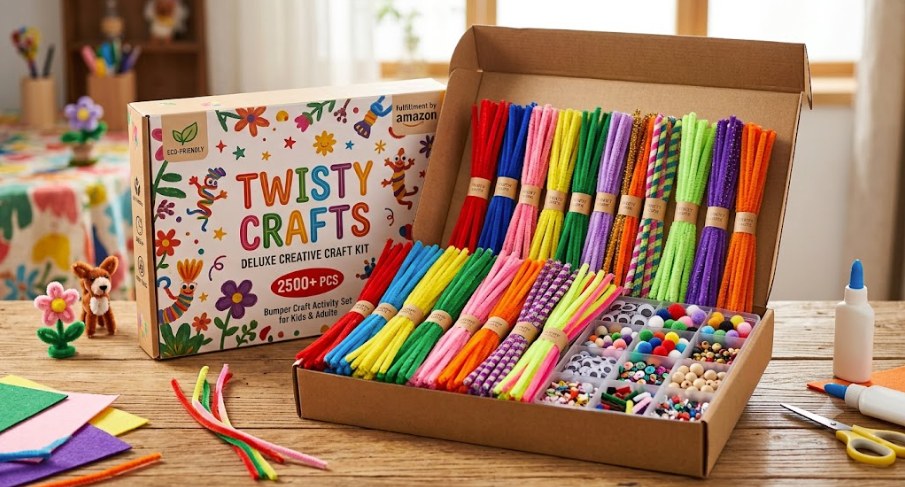
Introduction
Buyers choosing chenille stems for craft kits should match stem size, wire feel, color ratio, finish, accessory components, packaging format and quality checks to the final project. The safest approach is to approve a complete kit sample, including stems, accessories, instruction card, barcode, labels and carton marks, before bulk production.
Chenille stems are one of the most flexible components in craft kits. They can become flower stems, animal legs, ornament hooks, letters, glasses, crowns, wreath frames, classroom projects or seasonal decorations. They are light, colorful and easy to pack with other materials, which makes them useful for DIY brands, school supply distributors, Amazon sellers, subscription boxes and private-label craft programs.
For professional buyers, the main question is not simply “which pipe cleaner is cheapest?” A craft kit succeeds when every component works together. The stems need to match the instruction sheet, the colors need to match the product photos, the count needs to be accurate, and the packaging needs to survive retail or marketplace handling. This guide explains how to plan chenille stems as part of a complete kit.
Table of Contents
- Role in craft kits
- User age and project type
- Sizes and wire feel
- Color planning
- Accessories and components
- Packaging formats
- Sample approval
- Kit quality checks
- Cost and landed planning
- FAQ
The Role of Chenille Stems in Craft Kits
In many kits, chenille stems are the structural component. They bend, hold shape and connect other materials. In a flower kit, they may become stems or leaves. In an animal kit, they may become legs, tails or ears. In a Christmas kit, they may become trees, stars, candy canes or ornament hooks. Because they are so flexible, one specification can be used in many product concepts.
This flexibility is useful for buyers because it reduces the number of unique components needed in a product line. A brand can use similar stems across flower kits, holiday kits, classroom kits and gift boxes while changing colors and packaging. That said, the same stem will not be perfect for every project. A small decorative detail may need a thinner, softer stem, while a standing craft may need firmer wire.
When creating a new kit, buyers should first define how the stem will be used. If the user only twists two pieces together, a standard stem may work. If the user needs the stem to support a flower head or stand upright, wire feel and diameter become more important.
Match the Product to the User Age and Project Type
Craft kits for children, schools, adults and premium hobby users have different needs. A children’s kit should be easy to bend, simple to understand and packed with safe, age-appropriate components. A school kit may need clear counts and classroom-friendly packaging. A premium adult craft kit may need better color harmony, cleaner packaging and more consistent materials.
Project type also affects specification. Flower crafts often use green floral stems, tape and stamens together with chenille stems. Holiday crafts may require glitter colors and stronger shape holding. Marketplace kits may need compact packaging and accurate barcode labels. Retail kits may need stronger shelf presentation and a clean product photo on the package.
Before requesting a quote, write a short product use case. For example: “DIY flower kit for ages 8+, 3 flower designs, pastel stems, retail gift box, Amazon fulfillment.” This helps the supplier understand the real requirement much better than a loose request for “colored pipe cleaners.”
Choosing Size, Length and Wire Feel
Common chenille stem diameters include 6mm, 7mm and 8mm, often around 30cm long. Smaller diameters are useful for detailed work, classroom packs and lighter designs. Larger diameters look fuller and can be better for visible decorative parts. Custom lengths may reduce waste if the project always uses a shorter piece.
Wire feel should be tested with the actual project. If the kit asks users to twist stems around beads or floral wire, the stem should bend without breaking or shedding too much fiber. If the project creates a standing decoration, the wire should hold shape. For young users, the stem should not feel unnecessarily stiff.
For a more detailed specification comparison, see the Chenille Stem Size Guide. Buyers preparing large orders should include diameter, length, color, count and wire feel in the final kit specification.
Color Planning for Craft Kits
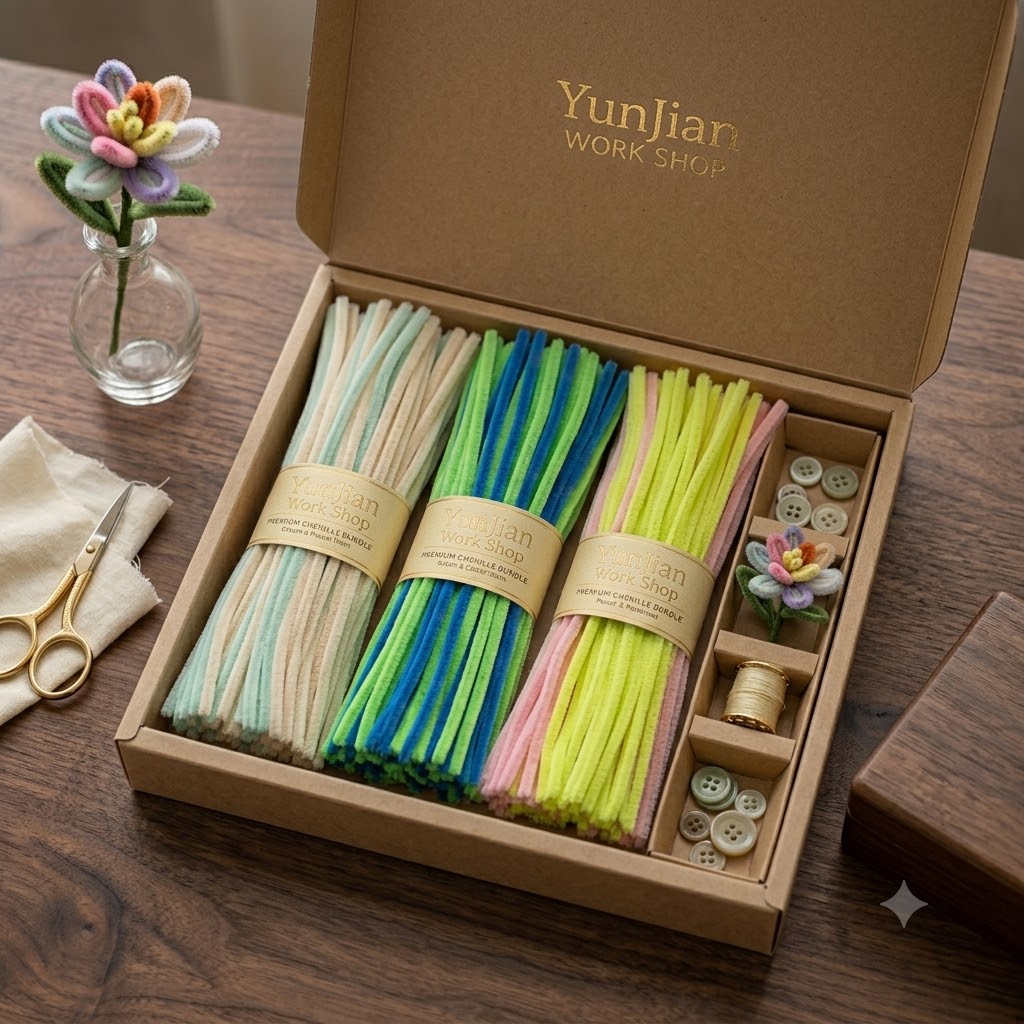
Color is one of the main reasons customers choose a craft kit. A pastel flower kit, bright classroom pack, Christmas ornament kit and premium botanical gift box all need different palettes. Buyers should define colors by approved sample, color chart, Pantone reference or previous order sample, not only by casual names.
Mixed ratios should be written as exact counts. A kit may require 10 pink, 10 yellow, 10 green and 5 white stems. If the ratio is not clear, the factory may pack an assortment that looks acceptable but does not match the instruction sheet. This can create customer complaints even when the stems themselves are good quality.
The Chenille Stem Color Guide explains how to plan standard colors, pastel colors, glitter colors and custom mixed ratios. For OEM kits, keep an approved color sample file for repeat orders.
Combining Chenille Stems with Accessories
Many craft kits include more than chenille stems. Buyers may add floral stems, floral tape, flower stamens, wrapping paper, foam, felt, beads, buttons, thread, glue, instruction cards or small tools. Each accessory should be treated as part of the kit specification.
If the kit includes flower projects, review related accessory pages such as floral stems, floral tape, flower stamens, floral wrapping paper and floral foam. These products can help a buyer build a more complete craft assortment instead of sourcing every component separately.
Component count is critical. If one kit includes 100 stems, 20 stamens, 10 floral wires and one instruction sheet, all of those items must be counted during packing. A missing component can make the kit unusable, especially for marketplace sellers where customer reviews directly affect listing performance.
Packaging Formats for Craft Kits
Packaging should match the sales channel. Bulk kits for schools may use simple bags or cartons. Retail craft brands may use header cards, printed bags or boxes. Premium gift kits may use a window box or kraft gift box. Amazon and marketplace sellers often care about barcode placement, compact size, carton labels and fulfillment handling.
Packaging design should be approved together with the product sample. Check artwork, color names, age grading, warning text, barcode, SKU, pack count, country of origin and carton marks. If the packaging shows a finished craft photo, confirm that the components inside can actually produce the same result.
For private-label programs, read the Custom Chenille Stem Packaging Guide and the OEM Chenille Stem Manufacturing Guide. These guides help buyers prepare packaging and production requirements before quotation.
Approve a Complete Kit Sample
For craft kits, approving only loose chenille stems is not enough. Buyers should approve a complete kit sample that includes every component, final packaging, label, barcode, instruction card and carton information if possible. This gives the buyer a realistic view of what the end customer will receive.
Sample approval should include a practical test. Build the craft using the kit components. Check whether the stems are long enough, whether the colors match the instruction, whether the wire holds shape and whether any components are missing. If the product is for children or schools, check whether the instructions are clear and the parts are easy to handle.
Keep the approved sample for repeat orders. Repeat-order consistency is easier when both buyer and supplier compare production against the same physical reference.
Quality Checks for OEM Craft Kits
Kit inspection should check both product quality and pack completeness. For chenille stems, inspect diameter, length, wire feel, pile coverage, color and count. For mixed kits, inspect the exact color ratio. For packaging, inspect artwork, barcode, labels, warning text and carton marks.
Open sampled packs and count every component. Do not assume a pack is correct because it looks full. For multi-component kits, small errors are easy to miss from the outside. A good inspection checklist should include all parts, not only the main product.
The Chenille Stem Quality Inspection Checklist gives a practical starting point. Add accessory count, instruction card version and kit assembly checks for complete OEM kit orders.
Cost and Landed Planning for Craft Kit Buyers
Craft kit cost is not only the price of chenille stems. Buyers should calculate the full kit: stems, accessories, printed materials, inner packaging, outer box, labels, carton packing, inspection and freight. A slightly more expensive pack may be more profitable if it reduces repacking work, improves shelf presentation or fits better into marketplace fulfillment.
Carton size is also important. Chenille stems are light, but finished craft kits can take space. Gift boxes, window boxes and protective inserts may increase shipping volume. Before confirming a large order, ask the supplier for carton dimensions, gross weight, units per carton and product photos packed inside the carton. This helps importers estimate freight and warehouse cost more accurately.
For brands selling through retailers, the landed cost should also include display requirements, barcode labels, warning text, language requirements and possible retail compliance checks. For marketplace sellers, product dimensions, barcode accuracy and packaging durability can affect fulfillment fees and customer reviews.
Common Mistakes When Buying Craft Kit Supplies
The most common mistake is approving each component separately but never testing the full kit. A stem may be good, a stamen may be good and a box may look good, yet the finished kit may still fail if the instructions require a color or length that was not packed. Buyers should build the project from the approved sample before production.
Another mistake is using vague color names. “Pastel mix,” “flower colors” or “children’s colors” can mean different things to different teams. Exact color counts reduce confusion. A third mistake is forgetting repeat-order records. If a kit sells well, the buyer will want the same colors, packaging and component list again. Keeping the approved sample and written specification makes repeat orders much smoother.
Questions Buyers Should Ask Before Quotation
- Which stem size and wire feel fit the intended craft project?
- Can you pack exact mixed color ratios per kit?
- Can you supply or coordinate related accessories?
- Can you make a complete kit sample before bulk production?
- What packaging formats do you support?
- Can you handle private-label artwork, barcode labels and carton marks?
- How will kit components be counted and inspected?
- Can approved samples be kept for repeat orders?
FAQ
Are chenille stems good for DIY craft kits?
Yes. They are colorful, bendable, lightweight and easy to combine with many other craft materials.
What size should I use for craft kits?
Many kits use 6mm, 7mm or 8mm stems around 30cm long. The right choice depends on project size, user age and shape-holding needs.
Can I order custom mixed colors?
Yes. Buyers should provide exact colors and piece counts per kit or per pack.
Can chenille stems be packed with floral accessories?
Yes. They can be packed with floral stems, tape, stamens, wrapping paper, foam and other craft components for flower-making kits.
What should I inspect in a craft kit order?
Inspect stem quality, color ratio, component count, instruction sheet, packaging artwork, barcode, labels and carton marks.
Can Yunjian Workshop support OEM craft kits?
Yunjian Workshop supports chenille stems, mixed color sets, floral craft accessories, OEM packaging and private-label kit planning for wholesale buyers.
Conclusion
Chenille stems are simple materials, but craft kits are specification-driven products. Buyers should define the project, user, size, color ratio, components, packaging and inspection method before bulk production. A complete approved sample is the best way to reduce misunderstandings and protect repeat orders.
Related Articles
Building an OEM craft kit?
Send your project idea, colors, component list, pack count, packaging style and destination market. We can help turn it into a clear quotation specification.