Introduction
Buyers sourcing Christmas chenille stems should define the holiday color palette, glitter or standard finish, diameter, length, pack count, mixed color ratio, packaging format, barcode requirements and delivery schedule before requesting a quote. The highest-risk details are color consistency, glitter shedding, wrong mixed ratios, late artwork approval and missing seasonal packaging requirements.
Christmas is one of the strongest seasonal opportunities for chenille stems. Importers, craft brands, school supply distributors, marketplace sellers and retail chains use them for ornaments, mini trees, wreaths, candy canes, reindeer antlers, garlands and DIY kits. The product is inexpensive, light and easy to combine with other craft supplies, which makes it attractive for both bulk buyers and private-label brands.
But holiday orders also carry special risk. The sales window is short. If production, packaging or shipping is late, the buyer may miss the season. If the color ratio is wrong, a kit may not match the instruction sheet. If glitter stems shed too much, customer reviews can suffer. A good Christmas sourcing plan is therefore less about finding a generic “cheap pipe cleaner” and more about defining a seasonal product that can be produced, packed and shipped reliably.
Table of Contents
- Christmas product types
- Holiday colors and ratios
- Glitter stem quality
- Sizes and wire feel
- Retail and kit packaging
- Order timeline
- Quality checks
- Quote information
- Supplier questions
- FAQ
Christmas Chenille Stem Product Types
Christmas chenille stem programs usually fall into three groups: standard fuzzy stems, glitter chenille stems and mixed holiday sets. Standard stems are useful for classroom projects, simple decorations and low-cost craft packs. Glitter stems are better for ornaments, premium kits, party decorations and anything that needs a metallic holiday look. Mixed sets combine solid, pastel, metallic or themed colors for a ready-to-use craft assortment.
Many buyers also combine chenille stems with accessories such as floral wire, flower stamens, beads, pom-poms, felt sheets, glue, paper, or small instruction cards. If the final product is a complete craft kit, the buyer should treat chenille stems as one component in a larger bill of materials. The pack must be checked as a full kit, not only as loose stems.
For a simple product-line comparison, review standard chenille stems, glitter chenille stems and mixed color sets. These pages help buyers decide whether the holiday range should focus on price, sparkle, color assortment or retail presentation.
Holiday Colors and Mixed Ratios
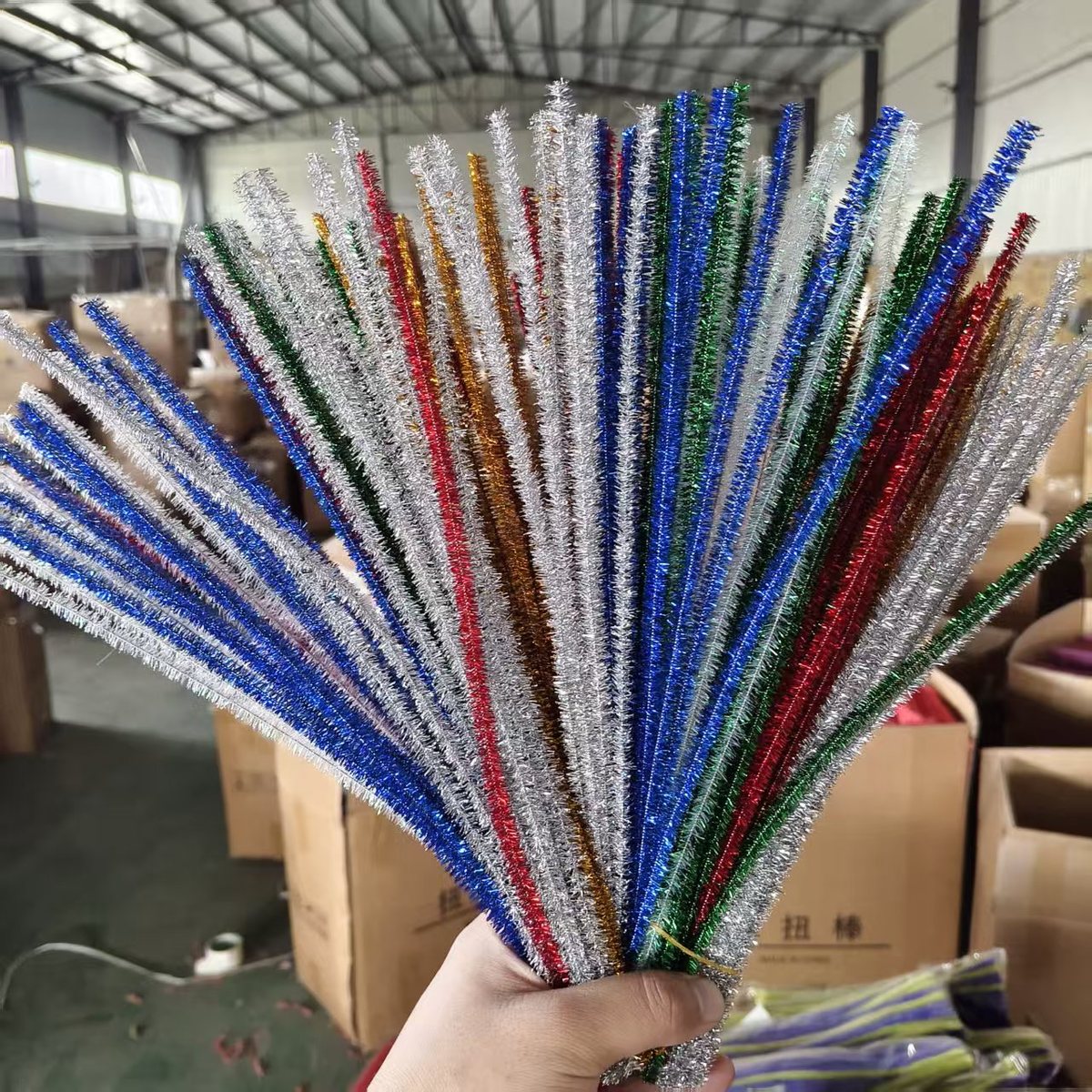
Traditional Christmas colors include red, green, white, gold and silver. Brown is often used for reindeer crafts, black for eyes or outlines, and blue or icy silver for winter themes. Some brands also create soft pastel Christmas kits or Nordic-style palettes. There is no single correct palette, but the color plan must match the buyer’s retail concept.
The most common mistake is writing “Christmas assorted colors” without defining the ratio. A 100-piece pack could mean 20 red, 20 green, 20 white, 20 gold and 20 silver. It could also mean 30 red, 30 green, 10 white, 10 gold, 10 silver and 10 brown. Those are different products. The factory, packaging team and inspector all need the same ratio in writing.
For private-label programs, buyers should also check how color names appear on packaging. “Gold,” “old gold,” “metallic gold” and “yellow gold” may not be interpreted the same way by every supplier. Use physical samples or a confirmed chenille stem color chart whenever the shade matters.
Glitter Chenille Stem Quality for Holiday Products
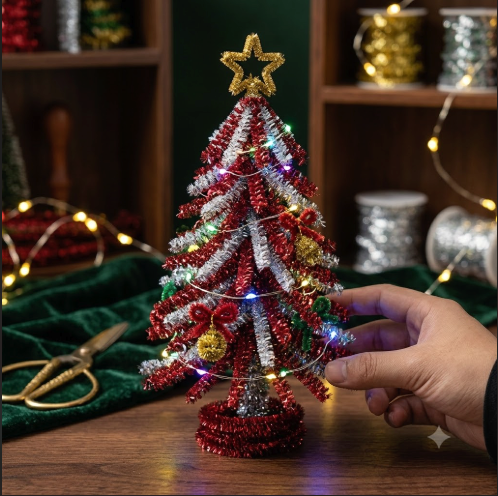
Glitter chenille stems are popular during Christmas because they reflect light and look festive in product photos. They are used for mini Christmas trees, star toppers, snowflakes, gift decorations, garlands and ornaments. For retail buyers, the shine of the product can be a major selling point.
Quality should be checked in three ways. First, compare sparkle and color against the approved sample. Second, bend and twist the stem to check whether the glitter effect remains even. Third, rub several pieces lightly to see whether shedding is acceptable for the target market. Some shedding is normal with many metallic craft materials, but excessive shedding can create poor user experience.
Glitter stems may also feel different from standard fuzzy stems. Buyers should test wire feel and shape holding. A decoration kit may need a firmer stem than a classroom craft pack. If the buyer sells a premium gift box, the product should look clean through the package and should not leave too much loose glitter inside the box.
Choosing Diameter, Length and Wire Feel
Common craft sizes include 6mm, 7mm and 8mm diameters, often around 30cm long. For Christmas decorations, 6mm stems are useful for small ornaments and detailed shapes. 7mm or 8mm stems can look fuller for trees, wreaths and larger decorations. Custom lengths may be useful when the product is designed for a fixed kit instruction.
Wire feel matters because holiday crafts are often shaped into loops, hooks, spirals and standing decorations. If the wire is too soft, a small tree or star may not hold shape. If it is too stiff, children may find it harder to bend. Buyers should test actual samples using the intended craft project, not only measure diameter and length.
The Chenille Stem Size Guide explains common diameters and length decisions in more detail. For a large seasonal program, add size tolerance and wire feel to the inspection checklist.
Retail Packaging and Christmas Craft Kits
Christmas packaging is not just decoration. It affects shelf appeal, barcode scanning, warehouse receiving and customer expectations. Common formats include simple polybags, header-card bags, hanging packs, window boxes, gift boxes and full DIY kit boxes with several accessories inside.
If the buyer sells on Amazon or through a marketplace, packaging should be compact, scannable and strong enough for fulfillment handling. If the buyer sells to retail stores, hanging holes, display orientation, barcode placement and seasonal graphics become more important. If the buyer sells school craft kits, the pack should be easy for teachers or parents to understand quickly.
Private-label packaging should be approved before bulk production. Confirm artwork, warning text, barcode, SKU, pack count, color names, country of origin, carton marks and any marketplace labels. The Custom Chenille Stem Packaging Guide can help buyers prepare these requirements before asking for a quote.
When Importers Should Place Christmas Orders
Christmas orders should be planned early because the selling season is unforgiving. A realistic timeline includes product planning, sample making, color approval, packaging artwork, production, inspection, sea or air shipping, customs clearance, warehousing and retail distribution. Each step can add delay if details are incomplete.
For a repeat order with simple bulk packaging, the timeline can be shorter. For a new private-label kit with custom colors and retail packaging, buyers should allow more time. Artwork approval and sample approval often take longer than expected because several teams may need to review product, design, barcode and label information.
Large buyers should also consider peak-season capacity. If many customers place Christmas orders at the same time, sample rooms, packaging lines and shipping schedules become busier. The safer approach is to define the product early, approve samples early and keep a clear final specification on file.
Quality Checks Before Shipment
For Christmas orders, inspection should focus on the details that affect the final selling season: color ratio, count per pack, glitter appearance, wire feel, pile coverage, packaging artwork, barcode, carton marks and carton strength. Inspectors should open sampled packs and count colors, not only view the pack from outside.
If the pack includes an instruction sheet or multiple kit components, each component should be checked against the packing list. A missing accessory can make a complete kit unusable. For retail boxes, check whether the product inside matches the product photo and claim on the package.
Use the Chenille Stem Quality Inspection Checklist as a starting point and add Christmas-specific details such as seasonal color ratio, glitter finish, artwork version and kit component count.
Information Buyers Should Send for an Accurate Quote
A Christmas chenille stem inquiry should include more than quantity. Send the target product type, diameter, length, finish, color list, mixed ratio, pack count, packaging format, artwork status, barcode needs, carton requirements, destination country and target delivery window. If the item will be sold as a kit, include the full component list and instruction concept.
Buyers should also mention the sales channel. A retail chain order, Amazon FBA product, school craft pack and premium gift box may all use chenille stems, but the packaging and inspection priorities are different. When the supplier knows the channel, it can give more practical suggestions for packing, carton size and sample approval.
One useful method is to send a simple “holiday pack brief.” It can list the final customer, season, product name, colors, count, target retail price, packaging style and any safety or label requirements. This helps the supplier quote the same product the buyer actually wants, rather than guessing from a short message.
Common Christmas Sourcing Mistakes
The first mistake is approving colors too late. Holiday colors often look different under different lighting, so physical samples should be confirmed early. The second mistake is treating glitter stems the same as standard stems. Glitter appearance, shedding and packing cleanliness need separate checks. The third mistake is approving product samples without checking final packaging. A great stem can still fail if the barcode, pack count or carton mark is wrong.
Another common issue is ordering too close to the selling season. Even if production is fast, sea freight, customs, warehouse receiving and retail distribution can take time. Buyers who sell through large customers should build in a buffer for inspection and possible correction. Seasonal products are not forgiving; a two-week delay can be more serious than a small price difference.
Questions to Ask a Christmas Chenille Stem Supplier
- Which Christmas colors and glitter colors are available as current samples?
- Can you produce custom color ratios for holiday packs?
- Can you support retail bags, header cards, gift boxes or full craft kits?
- How do you control glitter shedding and color consistency?
- Can you keep approved samples for repeat Christmas orders?
- What is the production lead time after artwork approval?
- Can you provide carton dimensions and gross weight before shipment?
- Can you prepare pre-shipment photos or support third-party inspection?
FAQ
What are Christmas chenille stems used for?
They are used for ornaments, mini trees, wreaths, candy canes, reindeer crafts, classroom projects, gift decorations and seasonal DIY kits.
Should Christmas pipe cleaners be glitter or standard?
Both can work. Standard stems are cost-effective for school and bulk craft packs, while glitter stems are better for premium holiday decorations and retail kits.
Can I order custom Christmas color ratios?
Yes. Buyers should provide the exact number of pieces per color, approved samples and packaging requirements before production.
What is the biggest risk in Christmas chenille stem orders?
The biggest risks are late approval, wrong color ratio, packaging mistakes and shipping too close to the selling season.
Do Christmas chenille stems need special packaging?
Not always, but seasonal packaging can improve retail presentation and reduce confusion for craft kit buyers.
Can Yunjian Workshop help with Christmas craft kit packaging?
Yunjian Workshop can support wholesale chenille stems, glitter stems, mixed color sets, OEM packaging and private-label craft kit planning for buyers.
Conclusion
Christmas chenille stems can be a strong seasonal product, but buyers should manage them with clear specifications. Define colors, ratios, sizes, finish, packaging, artwork and inspection points before production starts. A supplier that understands holiday craft programs can help reduce delays and avoid costly seasonal mistakes.
Related Articles
Planning a Christmas chenille stem order?
Send your target colors, finish, pack count, packaging style and destination market. We can help prepare a practical seasonal quotation.